




What's Happening?
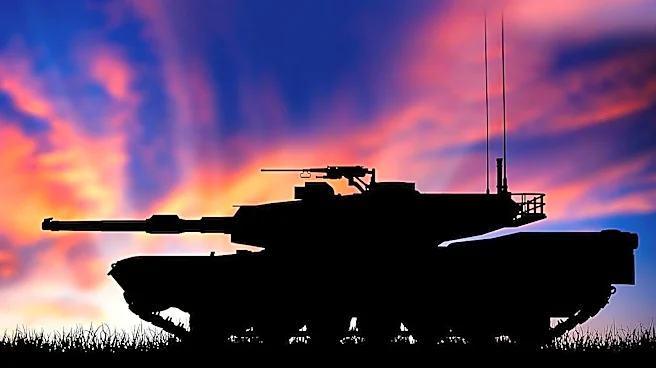
Sweden retired its unique turretless Strv 103 tank in 1997 after three decades of service, not due to mechanical failure or design flaws, but because of a fundamental shift in military doctrine following the end of the Cold War. Designed in the mid-1960s
by Bofors, the S-Tank featured a fixed 105 mm rifled cannon integrated directly into the hull, requiring the entire vehicle to pivot for horizontal aiming and a hydropneumatic suspension for vertical elevation. This design was optimized for defensive ambush tactics in Sweden's forested terrain, prioritizing a low profile and concealment over offensive mobility. Despite continuous upgrades, including improved fire-control systems in 1986 and new American Detroit Diesel engines in 1987-1988, the tank's inability to fire while moving rendered it incompatible with the new strategic emphasis on mobility and international interoperability, leading to its replacement by the Stridsvagn 121 (Leopard 2A4).
Why It's Important?
The retirement of the Strv 103 highlights the profound impact of geopolitical shifts on military technology and doctrine, even for neutral nations. For the U.S. and its allies, this case study underscores the importance of adaptability in defense planning and the challenges of maintaining military relevance in a rapidly changing global landscape. The Strv 103's unique design, while effective for a specific defensive strategy, ultimately became a liability when the strategic environment demanded greater mobility and interoperability with NATO standards. This situation illustrates how even technically sound and continuously upgraded military assets can become obsolete if they do not align with evolving strategic priorities. It also serves as a reminder that military investments must consider long-term geopolitical trends, as the cost of maintaining specialized equipment that no longer fits the strategic context can be substantial.
What's Next?
The story of the Strv 103 serves as a historical lesson for military strategists and defense planners globally. As geopolitical landscapes continue to evolve, nations will face similar decisions regarding the modernization or retirement of specialized military assets. Future defense procurement and strategic planning will likely continue to prioritize adaptability, interoperability, and multi-role capabilities to meet diverse and unpredictable threats. The ongoing integration of new technologies, such as artificial intelligence and advanced robotics, will further accelerate the pace of change in military doctrine and equipment. Nations, including the U.S., will need to continuously assess their defense postures to ensure their forces remain relevant and effective in a dynamic global security environment, learning from past examples like the Strv 103's retirement.
Beyond the Headlines
The Strv 103's story extends beyond military hardware, touching upon the broader implications of national identity and strategic autonomy. Sweden's decision to develop such a distinctive tank reflected its commitment to neutrality during the Cold War, emphasizing self-reliance and a unique defensive posture. The tank became a symbol of Swedish engineering ingenuity and its particular approach to national defense. Its eventual retirement, driven by a shift towards greater alignment with international standards and potential NATO cooperation, signifies a broader re-evaluation of national security strategies in a post-Cold War world. This transition reflects how nations balance their historical doctrines with the practicalities of modern alliances and global security challenges, illustrating the complex interplay between technological innovation, political ideology, and military necessity.