




What's Happening?
Nevada has filed a lawsuit against the federal government regarding its new management plan for the Colorado River. The state argues that the plan unfairly burdens Las Vegas with disproportionate water cuts, potentially leading to a 71% reduction in its water supply.
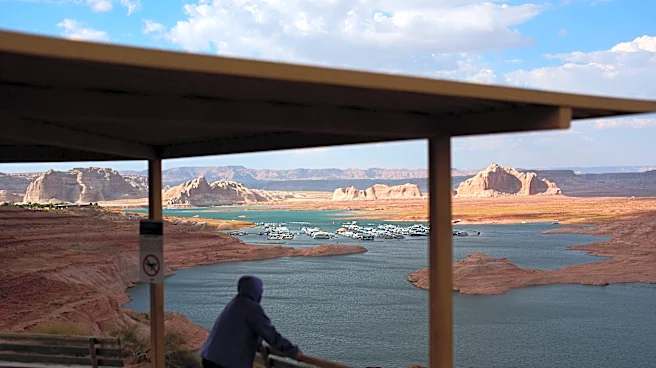
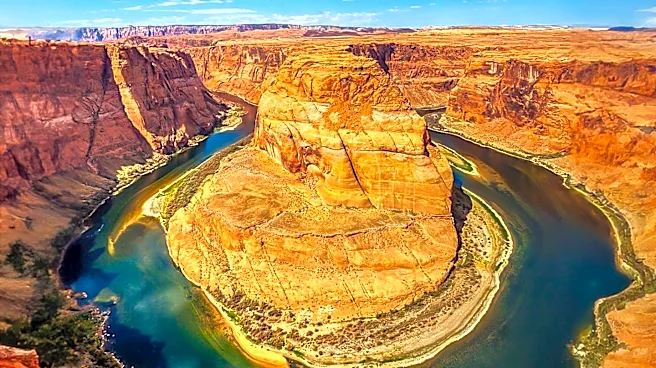
This move comes as a surprise to many Colorado River experts, who anticipated Arizona would be the first to litigate, given its expected significant cuts. Nevada officials have historically advocated for compromise and conservation in river negotiations, positioning themselves as a 'middle basin' state. However, the state asserts that the federal plan, developed after over two years of failed interstate negotiations, misinterprets existing law and did not adequately consider alternatives to such drastic cuts for its urban centers. The federal plan primarily focuses on reducing water usage in the Lower Basin states—Arizona, Nevada, and California—to maintain water levels in critical reservoirs, which are rapidly declining due to overuse and prolonged drought.
Why It's Important?
This lawsuit is significant because it introduces legal uncertainty into the immediate future of Colorado River operations, potentially disrupting a two-year arrangement designed to stabilize water supplies for Lower Basin states. While Nevada has not yet sought an immediate restraining order, a successful challenge could force a re-evaluation of the federal plan, impacting millions of residents and vast agricultural interests across the Southwest. The case highlights the escalating tensions and challenges in managing the dwindling Colorado River, a vital water source for seven U.S. states and 30 tribal nations. For Nevada, the potential 71% water cut is described as 'existential' for Las Vegas, a major economic hub that relies almost entirely on the river for its urban water supply. Unlike other states that can mitigate cuts by fallowing agricultural fields, Nevada's water use is concentrated in its urban areas, making it highly vulnerable to such reductions. The outcome could set a precedent for how water rights and environmental regulations are interpreted and enforced in the face of climate change and resource scarcity.
What's Next?
The lawsuit will proceed through the federal court system, where Nevada will seek to convince a judge that the federal government's plan is flawed and legally unsound. The state's legal challenge could lead to a court-ordered revision of the water management plan, potentially altering the allocation of water among the Lower Basin states. While the lawsuit creates immediate uncertainty, experts suggest that it does not necessarily signal the end of collaboration among basin states. Negotiations and litigation can occur simultaneously, as states may continue to seek agreements on sharing shortages while legal battles unfold. The possibility of a broader, seven-state agreement remains, especially if the legal process prompts renewed efforts to find mutually acceptable solutions. Major stakeholders, including other states, tribal nations, and environmental groups, will closely monitor the proceedings, as the ruling could influence future water management strategies and inter-state agreements across the Colorado River Basin.
Beyond the Headlines
Beyond the immediate legal and operational implications, Nevada's lawsuit underscores deeper issues concerning environmental governance, urban development in arid regions, and the long-term sustainability of water resources in the American West. The case brings to the forefront the ethical dilemma of balancing urban growth with ecological preservation and the equitable distribution of scarce resources. It also highlights the limitations of existing legal frameworks, such as the National Environmental Policy Act (NEPA), in addressing complex, multi-jurisdictional environmental challenges exacerbated by climate change. The lawsuit could trigger a re-examination of how federal agencies conduct environmental impact assessments and consider economic consequences in their decision-making processes. Furthermore, it may prompt a broader public discourse on the need for innovative water conservation strategies, infrastructure adjustments (like those for Glen Canyon Dam), and a more inclusive approach to negotiations that fully incorporates the rights and needs of tribal nations, who hold significant, yet often marginalized, water rights.