

What's Happening?
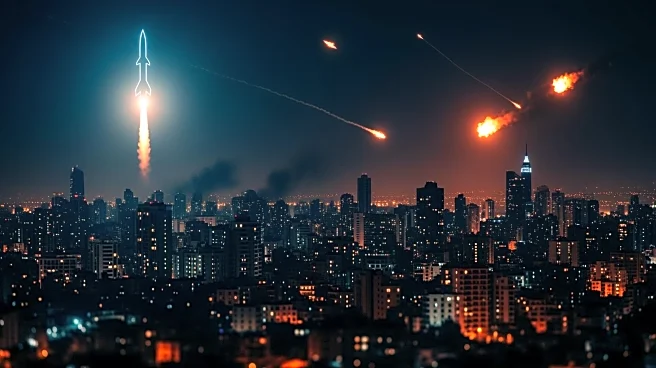
The Israeli Defense Forces (IDF) have reported a significant escalation in regional tensions following a missile barrage from Iran that triggered air raid sirens across central Israel. This development comes amid ongoing hostilities involving Hezbollah,
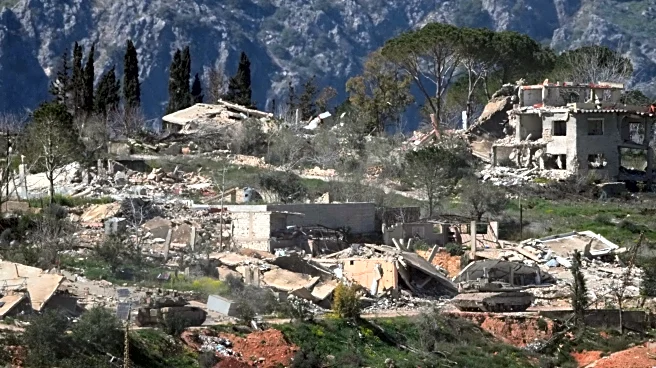
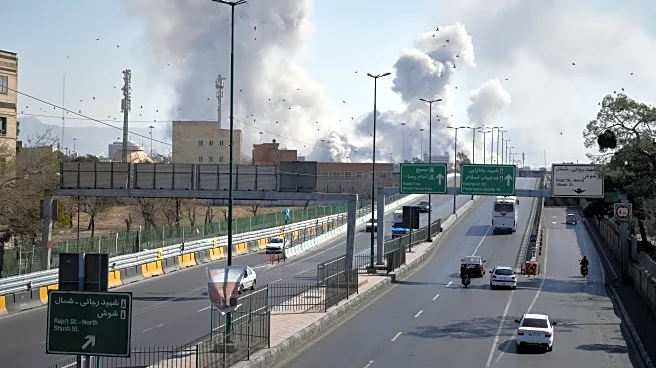
which has reportedly expanded its range of attacks. According to IDF spokesman Brig. Gen. Effie Defrin, Hezbollah has increased its missile launches towards northern Israeli communities and is attempting to extend its reach to other areas. In response, the IDF has conducted airstrikes on over 80 Hezbollah targets in Lebanon, including command centers and missile launch sites. Additionally, the IDF has targeted Iranian regime infrastructure as part of Operation Roaring Lion, striking key military and security facilities in Iran. The situation remains tense, with Israeli President Isaac Herzog issuing a stern warning to Hezbollah against further aggression.
Why It's Important?
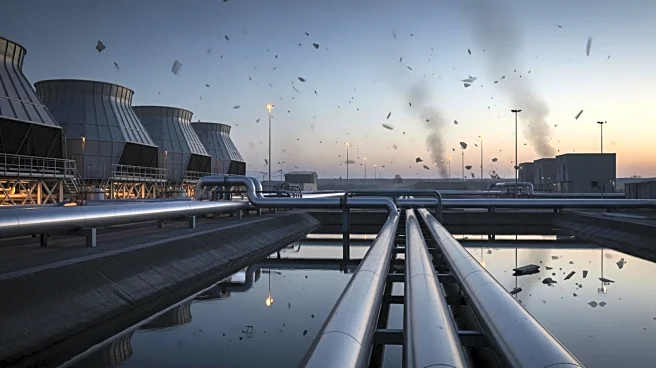
The escalation of hostilities between Israel, Iran, and Hezbollah has significant implications for regional stability in the Middle East. The increased range of Hezbollah's attacks poses a direct threat to Israeli security, potentially leading to broader military engagements. The IDF's proactive strikes on Iranian and Hezbollah targets aim to deter further aggression but also risk escalating the conflict. This situation could impact global oil markets, given the strategic importance of the region, and may influence international diplomatic efforts to mediate peace. The ongoing conflict also highlights the complex geopolitical dynamics involving Iran's influence in the region and the persistent threat posed by Hezbollah to Israeli security.
What's Next?
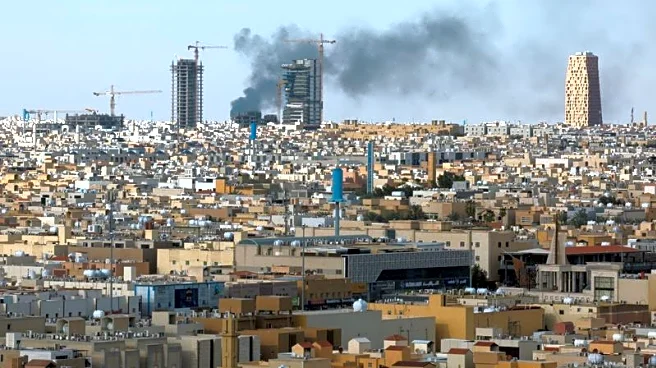
As tensions continue to rise, further military engagements between Israel and Hezbollah are likely. The IDF's ongoing operations against Iranian and Hezbollah targets suggest a sustained military campaign aimed at neutralizing perceived threats. International stakeholders, including the United States and European nations, may increase diplomatic efforts to de-escalate the situation. Additionally, regional actors such as Saudi Arabia and other Gulf states may respond to Iran's actions, potentially leading to broader regional alignments or conflicts. The situation remains fluid, with potential for both escalation and diplomatic resolution.