


What's Happening?
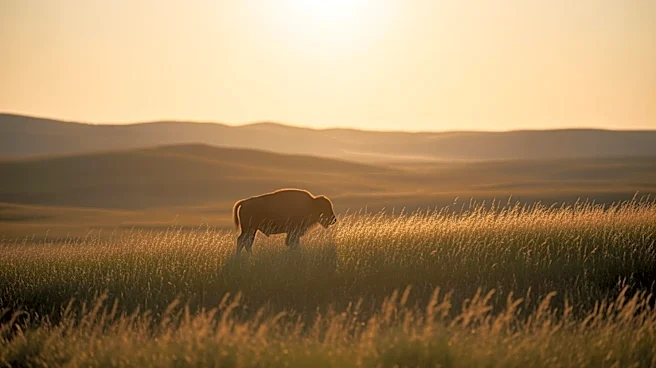
A bison calf was born at the Burlington Prairie Forest Preserve in Kane County, Illinois, marking the first birth since the reintroduction of a small herd of American buffalo to the area. The herd, consisting of six bison, was introduced in December as part
of a conservation effort by the Kane County Forest Preserve District and the American Indian Center of Chicago. The birth of the calf, which was unexpected due to the young age of the herd members, represents a significant step in the restoration of the prairie ecosystem. The public can now visit the herd, including the new calf, at the preserve.
Why It's Important?
The birth of the bison calf is a significant milestone in the conservation efforts at Burlington Prairie. Bison play a crucial role in prairie ecosystems by creating microhabitats, improving soil health, and increasing plant diversity. Their presence is expected to enhance the ecological health of the area, attracting more visitors and raising awareness about prairie restoration. For the American Indian Center of Chicago, the birth also holds cultural significance, providing a living connection to land and heritage for the Native American community. This event underscores the importance of collaborative conservation efforts in preserving biodiversity and cultural heritage.
What's Next?
The Kane County Forest Preserve District and the American Indian Center of Chicago plan to continue their conservation efforts, with the American Indian Center offering community programming related to the bison herd. These programs aim to engage the Native American community and the public, fostering a deeper understanding of the ecological and cultural significance of bison. The success of this initiative may inspire similar conservation projects in other regions, promoting the restoration of native species and habitats. Additionally, the presence of the bison herd is expected to draw more visitors to the preserve, supporting local tourism and education efforts.
Beyond the Headlines
The reintroduction of bison to Burlington Prairie highlights the broader implications of conservation efforts that integrate cultural and ecological restoration. For many Native American nations, bison are not only ecologically important but also hold spiritual and cultural significance. The near extinction of bison in the past is closely tied to the history of harm done to Native communities. This project represents a step towards healing and restoring relationships with the land. It also serves as a model for how conservation can be inclusive, involving indigenous communities in shaping the care and management of natural resources.