
What's Happening?
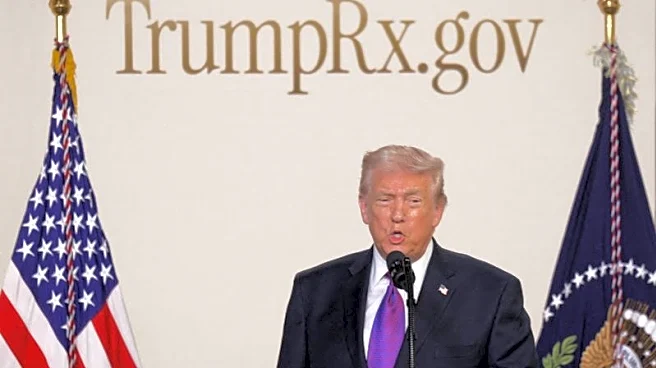
President Trump has introduced TrumpRx, a direct-to-consumer drug platform aimed at providing discounted prescription medications. The platform, TrumpRx.gov, allows uninsured Americans to access coupons
for over 40 prescription drugs, including those for obesity and asthma. President Trump claims the initiative will offer significant savings, with discounts ranging from 33% to 93%. However, the platform has faced criticism from various quarters. Health policy expert Jeffrey Singer from the Cato Institute acknowledges the potential for cost sensitivity but warns that a government-run platform could stifle private competition. Consumer advocacy group Public Citizen argues that TrumpRx primarily benefits pharmaceutical companies by promoting their products without genuine price accountability. The initiative is particularly relevant to Black Americans, who are more likely to be uninsured and rely on cash transactions, making them a key target audience for TrumpRx.
Why It's Important?
The launch of TrumpRx is significant as it addresses the ongoing issue of high prescription drug costs in the U.S., particularly affecting uninsured populations. By targeting uninsured Americans, the platform could potentially provide financial relief to many, especially within the Black community, which faces higher rates of being uninsured. However, critics argue that the platform may inadvertently benefit pharmaceutical companies more than consumers by weakening the bargaining power of insurance companies. This could lead to sustained high drug prices, undermining efforts to make healthcare more affordable. The initiative also highlights the broader debate over government involvement in healthcare markets and the potential for political favoritism. As the economic gap widens, the affordability of medications remains a critical concern, making TrumpRx a focal point in discussions about healthcare equity and access.
What's Next?
The future of TrumpRx will likely involve continued scrutiny and debate. Stakeholders, including political leaders and consumer advocacy groups, may push for modifications to ensure the platform genuinely benefits consumers rather than pharmaceutical companies. There could be calls for increased transparency and accountability in how discounts are determined and applied. Additionally, the platform's impact on private competition and the broader healthcare market will be closely monitored. As the platform evolves, it may face legal and regulatory challenges, particularly if it is perceived to contravene existing healthcare policies or regulations. The response from the public and healthcare providers will also play a crucial role in shaping the platform's trajectory and effectiveness.