




What's Happening?
A federal court has concluded a dispute over exploratory drilling in the Black Hills, a region considered sacred by the Lakota, Nakota, and Dakota tribes of the Oceti Sakowin, or Seven Council Fires of the Great Sioux Nation. The controversy arose when
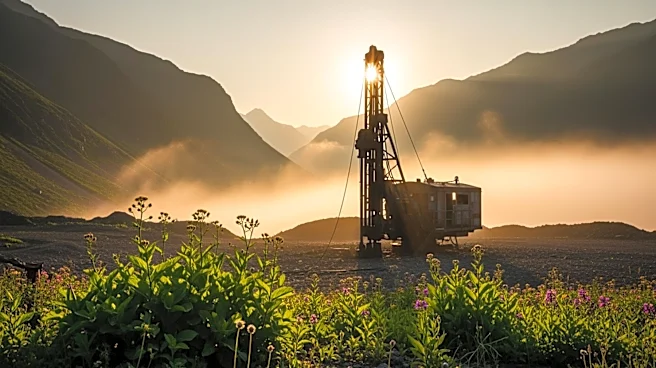
Pete Lien & Sons (PLS) received approval for a graphite drilling project near Pe’Sla, prompting nine Sioux tribes and three non-profit organizations to sue the U.S. Forest Service. The plaintiffs argued that the drilling would desecrate their sacred sites. A U.S. District Judge in Rapid City issued a Temporary Restraining Order to halt the drilling, leading PLS to withdraw its project entirely. The court found that the U.S. Forest Service likely violated the National Environmental Policy Act by approving the project under a categorical exclusion, which is only applicable to mineral exploratory projects completed within one year.
Why It's Important?
The court's decision marks a significant victory for the Lakota people in their ongoing efforts to protect their sacred lands. This case underscores the importance of respecting indigenous rights and cultural heritage in land management and development projects. The ruling may set a precedent for future legal challenges involving indigenous land rights and environmental protection. It highlights the need for federal agencies to adhere strictly to environmental laws and policies, ensuring that development projects do not infringe on the rights of indigenous communities. The withdrawal of the drilling project also reflects the growing influence of indigenous advocacy in shaping public policy and land use decisions.
What's Next?
Following the court's decision, Pete Lien & Sons has announced it will not pursue further drilling plans near Pe’Sla. The tribes involved in the lawsuit may continue to monitor and challenge any future projects that threaten their sacred sites. The case may encourage other indigenous groups to seek legal recourse in similar situations, potentially leading to increased scrutiny of development projects on or near indigenous lands. The U.S. Forest Service may need to review its procedures for granting categorical exclusions to ensure compliance with environmental laws and prevent future legal challenges.