






What's Happening?
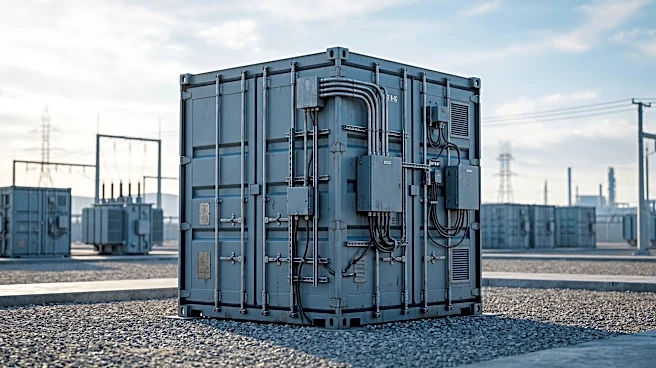
RWE Supply & Trading Americas has withdrawn its 300-megawatt Fourth Quarter battery project, planned for the former Dickerson coal plant in western Montgomery County, from Maryland's first solicitation for large grid batteries under the Next Generation
Energy Act. Despite being ranked highest by the Maryland Public Service Commission's consultant, Power Advisory LLC, for its projected benefits and cost savings for residential customers, RWE opted to pursue an "alternative path forward" for the project. The commission expressed disappointment over the withdrawal, noting that the project was expected to save Maryland residential customers more than any other proposed project, with a projected net credit of $10.35 per customer over its lifespan. The commission ultimately awarded credits to two other projects totaling 440 megawatts, falling short of its 800-megawatt target.
Why It's Important?
This withdrawal is significant for Maryland's energy future and its clean energy goals. The Dickerson project was identified as the most beneficial for ratepayers, and its absence from the state program means that Maryland residents will not immediately realize the projected savings. It also highlights potential challenges in implementing large-scale energy storage projects, even those deemed highly advantageous. RWE's decision to pursue an "alternative path" suggests that the state's credit program may not have aligned with the company's broader commercialization strategies or financial incentives. This situation could impact the pace of grid modernization and the integration of renewable energy sources in Maryland, as battery storage is crucial for grid stability and efficiency.
What's Next?
The Maryland Public Service Commission plans to issue a second 800-megawatt solicitation for battery storage projects on or before January 1, 2027, with operations expected by the fourth quarter of 2029. It remains unclear whether RWE will bid the Dickerson project or another Maryland battery into this second round, or what its "alternative path forward" entails. The project's planned commercial operation date is still listed as October 1, 2028, suggesting RWE intends to proceed with development outside the state's credit program. The commission will need to assess how to attract and retain highly beneficial projects in future solicitations to meet its energy storage targets and deliver promised ratepayer benefits.
Beyond the Headlines
RWE's withdrawal of the Dickerson battery project, despite its top ranking, raises deeper questions about the interplay between public policy, market incentives, and private sector investment in renewable energy infrastructure. It suggests that even well-intentioned state programs may not always align with the complex financial and strategic considerations of large energy developers. The incident underscores the challenges of transitioning to a cleaner energy grid, where the long-term benefits to ratepayers must be balanced against the immediate commercial viability for developers. This situation could prompt a re-evaluation of how states design incentive programs to ensure they are attractive enough to secure the most impactful projects, ultimately affecting the speed and cost of the energy transition.