







What's Happening?
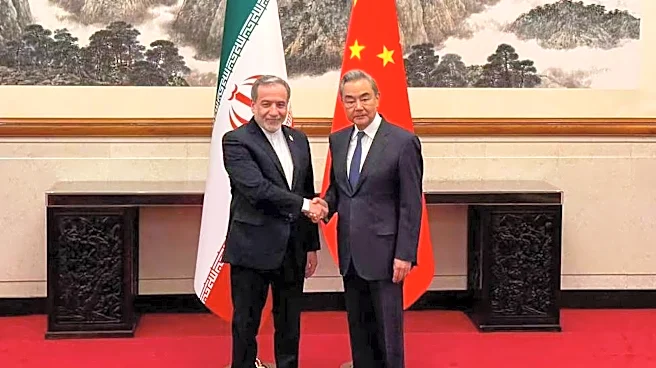
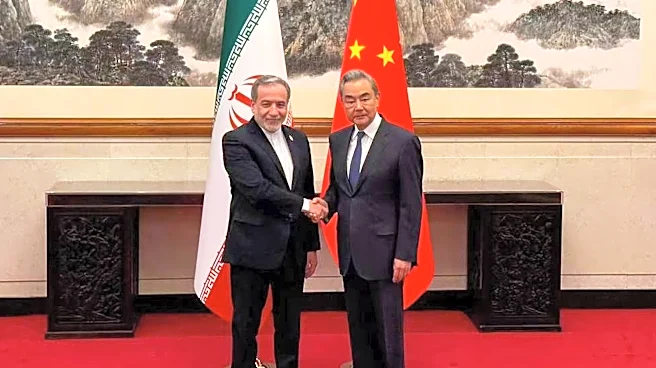
Iranian Foreign Minister Abbas Araghchi's visit to Beijing highlights China's potential influence in the ongoing US-Iran conflict. The meeting with Chinese Foreign Minister Wang Yi comes as both nations seek to broker a peace deal and reopen the strategic
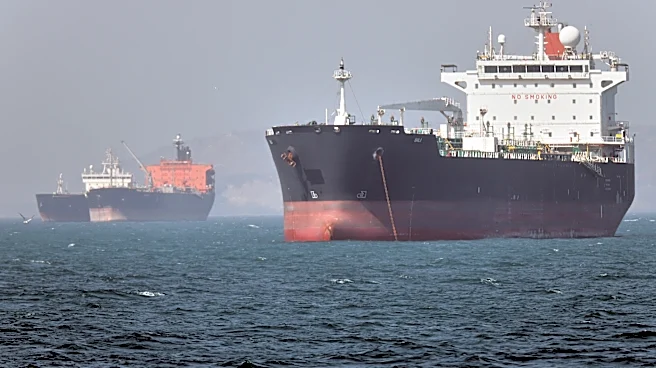
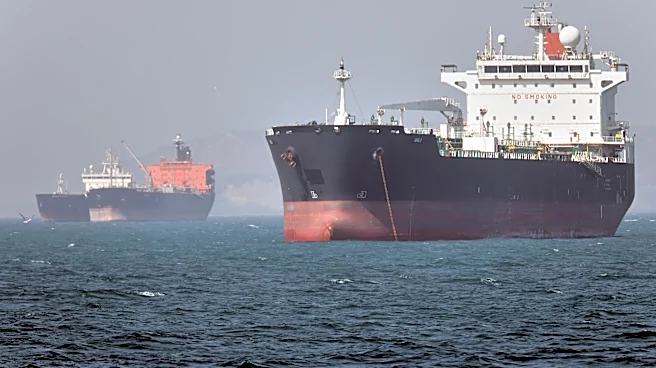
Strait of Hormuz. The strait, a critical passage for global oil and gas shipments, has been a focal point of tensions, with Iran restricting shipping and the US imposing blockades. China's involvement is seen as crucial due to its economic ties with Iran and its interest in maintaining stability in the region. The visit precedes a scheduled meeting between President Trump and Chinese President Xi Jinping, where further diplomatic efforts are expected.
Why It's Important?
China's role in the US-Iran conflict underscores its growing influence in global diplomacy. As a major economic partner of Iran, China has significant leverage in encouraging Tehran to negotiate. The reopening of the Strait of Hormuz is vital for global energy markets, and China's involvement could facilitate a resolution that benefits all parties. Additionally, China's actions may impact its relations with the US, as both countries navigate their strategic interests in the Middle East. The situation also highlights the interconnectedness of global economies and the importance of diplomatic solutions to international conflicts.
What's Next?
The upcoming meeting between President Trump and President Xi Jinping could be pivotal in shaping the future of the US-Iran conflict. Diplomatic efforts may focus on securing a ceasefire and reopening the Strait of Hormuz, with China playing a mediating role. The international community will be watching closely to see if these talks lead to a de-escalation of tensions and a long-term peace agreement. The outcome could influence global energy markets, US-China relations, and the broader geopolitical landscape. Additionally, China's actions may set a precedent for its future involvement in international conflicts.