




What's Happening?
Intramural programs, defined as activities conducted within a single organization rather than against outside competitors, are widely implemented across American universities, corporations, and municipal agencies. These programs aim to broaden participation
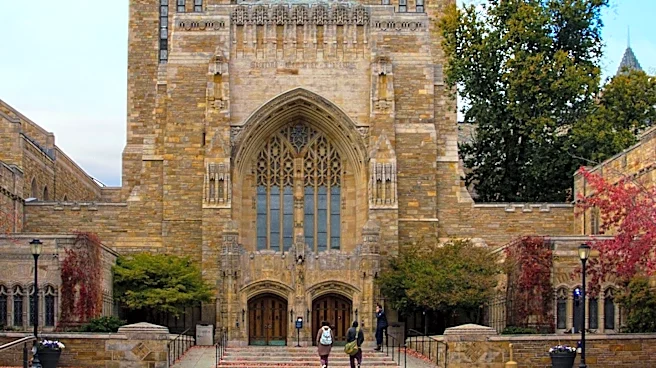
in competitive and recreational experiences beyond elite levels, emphasizing inclusivity, social cohesion, and alignment with institutional goals. Originating in early 20th-century American universities like Yale, intramural sports were designed to make competitive experiences accessible to the entire student body. Over time, this framework expanded to military installations, corporate campuses, and community centers, adapting to various cultural and operational contexts. Today, intramural activities encompass a broad range, from traditional sports leagues and trivia nights to art workshops and innovation challenges, with digital tools further extending their reach through virtual tournaments and online competitions. These programs are structured with core components such as scope and eligibility, activity types, scheduling, registration, rules, resource allocation, and evaluation to ensure clarity, fairness, and engagement within the defined community.
Why It's Important?
The widespread adoption of intramural programs is significant because they serve as a foundational layer of engagement that supports strategic objectives beyond simple recreation. For educational institutions, robust intramural offerings complement academic missions by fostering time management, teamwork, and resilience, contributing to higher student retention and satisfaction. In corporate environments, these programs aid in talent attraction and retention by signaling a commitment to work-life balance and holistic well-being, often improving teamwork and communication. Municipal agencies utilize intramural programs to strengthen social cohesion and public health, particularly in neighborhoods lacking access to private recreational facilities, by providing safe spaces and promoting physical activity. The emphasis on internal participation allows organizers to tailor programs to specific community needs, allocate resources equitably, and measure impact in terms of cultural influence and well-being rather than external rankings, ultimately building stronger, more connected communities within these organizations.
What's Next?
As organizations continue to navigate evolving expectations regarding health, flexibility, and belonging, the role of intramural structures is expected to grow. Future programs may integrate mental health resources, adaptive formats for diverse abilities, and cross-institutional collaborations while maintaining their internal focus. Advances in scheduling algorithms, data visualization, and communication tools will likely enable more personalized experiences and efficient management of large-scale programs. This technological integration will reinforce the core principle that thoughtfully contained competition can drive meaningful engagement within a community. Furthermore, there will be an ongoing emphasis on diversity, equity, and inclusion in intramural practice, influencing everything from marketing language to facility access, ensuring programs are welcoming to underrepresented groups and reflect a broad spectrum of identities and abilities. Measurement and evaluation will also become more rigorous, using data and qualitative feedback to refine offerings and justify continued investment.
Beyond the Headlines
Beyond the immediate benefits of physical activity and social interaction, intramural programs foster a unique sense of belonging and institutional identity. By creating structured environments where individuals can take risks and form connections within a defined community, these programs contribute to a deeper sense of loyalty and shared purpose. The intentional lowering of barriers to entry allows individuals of all skill levels to participate, promoting a culture of inclusivity that might not be present in more competitive, external settings. This internal focus also enables organizations to experiment with innovative program designs that align directly with their specific values and goals, whether it's fostering interdepartmental collaboration in a corporation or promoting civic engagement in a municipality. The enduring strength of the intramural definition lies in its ability to balance structure with flexibility and inclusion with performance, offering a durable approach to engagement that resonates across various facets of American institutional life.