



What's Happening?
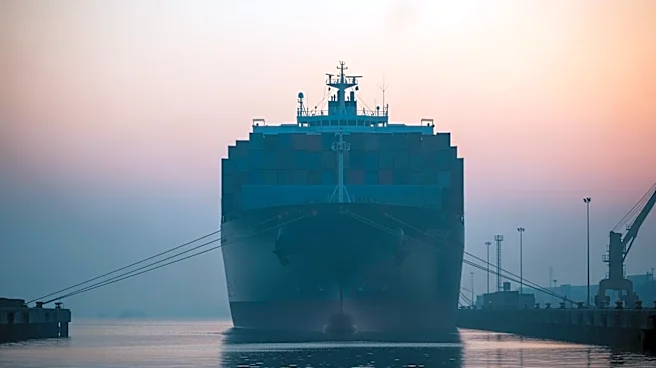
Swedish police have impounded a small cargo ship named Caffa, following a legal request from Ukraine. The ship is alleged to have been involved in the theft of grain from Ukrainian territories occupied by Russia. The vessel had been detained for nine
weeks due to suspicions of operating without a proper flag registry and safety violations. Ukraine has accused Russia of exporting stolen grain from occupied regions, prompting it to seek international cooperation for the first time by filing legal requests in Sweden and Israel. Swedish prosecutors accepted Ukraine's request, deciding to hold the ship during judicial proceedings. The Caffa, a 4,300 dwt general cargo ship built in 1997, was intercepted by Swedish forces while traveling from Casablanca to Saint Petersburg. It was ordered to dock in Trelleborg, where it remains impounded pending court decisions.
Why It's Important?
This development highlights the ongoing international legal and diplomatic efforts to address alleged Russian exploitation of Ukrainian resources amid the conflict. The seizure of the Caffa underscores the broader geopolitical tensions and the complexities of enforcing international maritime law. For Ukraine, securing international cooperation is crucial in its strategy to counteract Russia's economic activities in occupied territories. The case also reflects Sweden's role in upholding maritime regulations and supporting international legal frameworks. The outcome of this case could set a precedent for how similar disputes are handled in the future, potentially influencing international maritime law enforcement and cooperation.
What's Next?
The Swedish courts will now decide the fate of the Caffa, with the ship remaining impounded until a legal resolution is reached. The case could prompt further international legal actions by Ukraine against other vessels suspected of similar activities. The decision may also influence how other countries respond to Ukraine's requests for assistance in enforcing sanctions and maritime laws. Additionally, the handling of the crew, who are from outside the Schengen area, may involve further legal and diplomatic considerations.