







What's Happening?
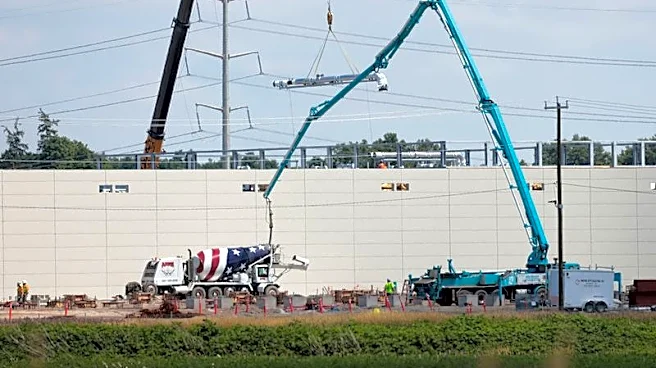
President Trump has engaged in aggressive negotiations with Canada over the Gordie Howe Bridge, a $6.4 billion infrastructure project connecting Windsor, Ontario, and Detroit, Michigan. Despite Canada funding the bridge, the U.S. demanded a share of the toll
revenue, which Canada agreed to in order to ensure the bridge's operation. This move reflects President Trump's transactional approach to international relations, prioritizing perceived strength and economic gain over traditional diplomatic alliances. The situation underscores the shifting dynamics in U.S.-Canada relations under Trump's leadership.
Why It's Important?
The negotiations over the Gordie Howe Bridge illustrate the broader impact of President Trump's foreign policy approach, which often emphasizes economic leverage and unilateral decision-making. This has significant implications for U.S.-Canada relations, potentially affecting trade, infrastructure projects, and diplomatic ties. The situation highlights the challenges faced by countries in navigating relationships with the U.S. under Trump's administration, where traditional alliances may be overshadowed by economic interests. The outcome of these negotiations could influence future infrastructure and trade agreements between the two nations.
What's Next?
As the Gordie Howe Bridge becomes operational, both Canada and the U.S. will need to manage the economic and diplomatic implications of the toll revenue agreement. The situation may prompt Canada to reassess its approach to bilateral negotiations with the U.S., potentially seeking to diversify its economic partnerships. The broader impact on U.S.-Canada relations could influence future trade agreements and diplomatic interactions. The situation also serves as a reminder of the importance of strategic economic planning in international relations.