





What's Happening?
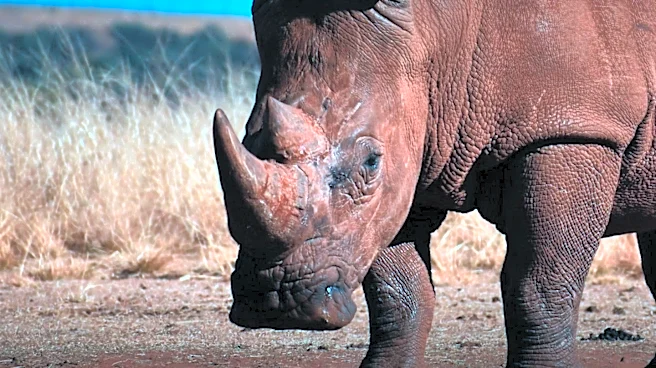
Several rare rhino species, including the Javan rhino and Sumatran rhino, are facing critical threats that are pushing them towards extinction. Javan rhinos, once widespread across Southeast Asia, are now confined to Ujung Kulon National Park in Java,
with fewer than 100 individuals remaining, possibly as few as 50. They are primarily threatened by poaching for their single horn, habitat loss, and natural disasters like tsunamis and the active Krakatoa volcano. Similarly, Sumatran rhinos, characterized by their two horns, exist in fewer than 50 individuals across four isolated pockets in Sumatra and Indonesian Borneo. Their decline is attributed to poaching, logging, and the expansion of palm oil plantations, which have severely fragmented their forest habitats. These rhinos are among several animal species globally identified as critically endangered due to small, isolated, and declining populations.
Why It's Important?
The potential extinction of Javan and Sumatran rhinos represents a significant loss to global biodiversity and ecosystem health. Rhinos play a crucial role in their habitats as large herbivores, influencing vegetation structure and seed dispersal. Their disappearance could lead to cascading ecological effects, impacting other species and the overall balance of their ecosystems. The threats they face, such as poaching and habitat destruction, highlight broader environmental challenges driven by human activities, including illegal wildlife trade and unsustainable land use. The decline of these iconic species serves as a stark indicator of the urgent need for more effective conservation strategies and international cooperation to protect endangered wildlife and their habitats. Failure to address these issues could lead to irreversible ecological damage and a diminished natural world.
What's Next?
Conservation efforts for these rhino species will likely intensify, focusing on anti-poaching measures, habitat protection, and potentially captive breeding programs. For Javan rhinos, continued vigilance within Ujung Kulon National Park is crucial, alongside strategies to mitigate risks from natural disasters. For Sumatran rhinos, efforts will concentrate on protecting their fragmented habitats from further encroachment by logging and palm oil industries. International collaboration and funding will be essential to support these initiatives, including community engagement to reduce poaching and promote sustainable land management. Research into their reproductive rates and genetic diversity will also be vital to inform future conservation actions aimed at boosting their populations and ensuring their long-term survival.
Beyond the Headlines
The plight of the Javan and Sumatran rhinos underscores the complex interplay between human development and wildlife conservation. The demand for rhino horns in black markets, driven by traditional beliefs, continues to fuel poaching despite international bans. This highlights a deeper ethical challenge regarding human exploitation of natural resources and the value placed on endangered species. Furthermore, the destruction of their habitats for agriculture and industry reflects a global pattern of prioritizing economic gain over environmental preservation. Addressing these issues requires not only direct conservation actions but also a fundamental shift in societal attitudes towards wildlife, promoting awareness, and fostering a sense of shared responsibility for biodiversity. The long-term survival of these rhinos depends on a concerted global effort to tackle both immediate threats and underlying socio-economic drivers of their decline.