



What's Happening?
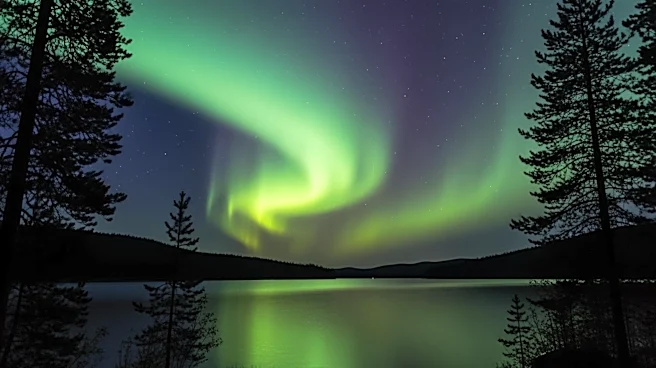
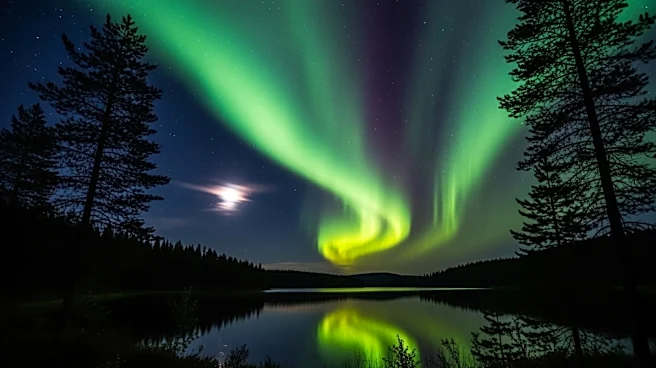
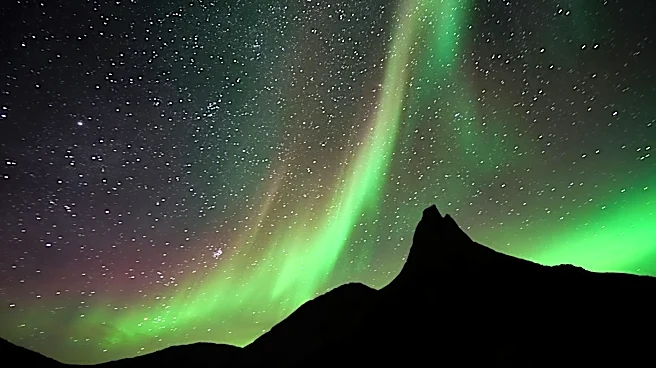
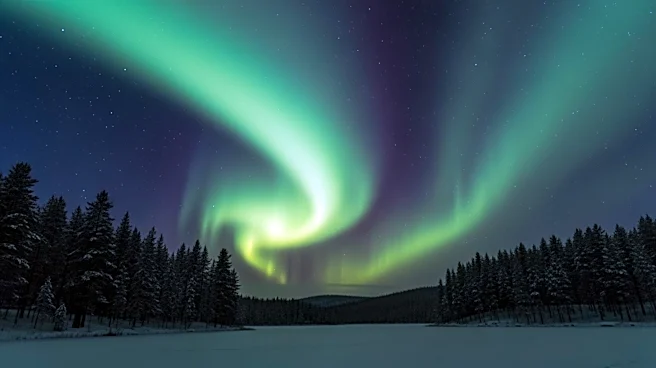
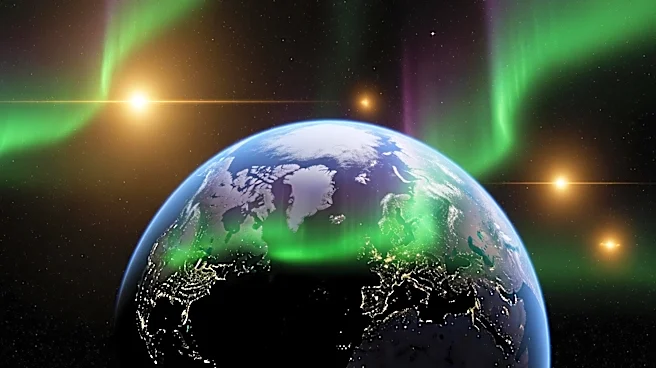
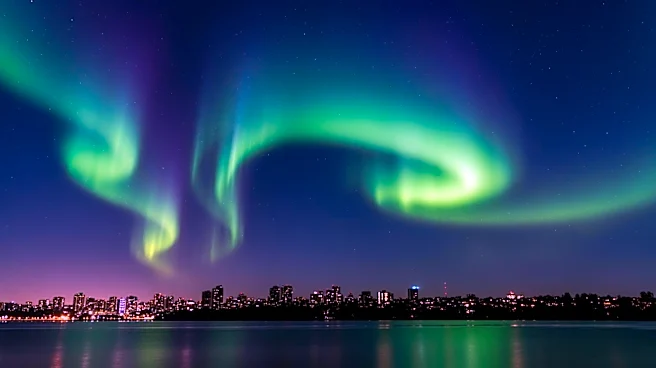
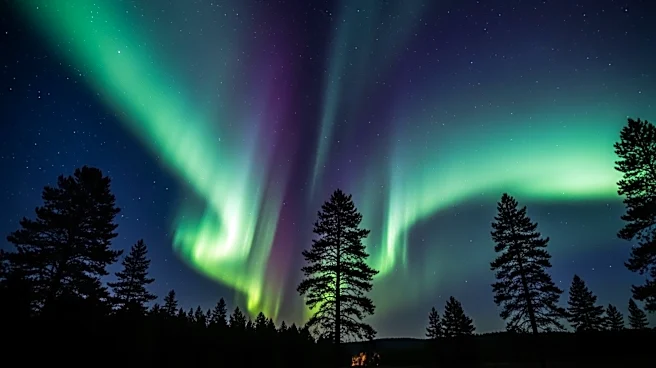
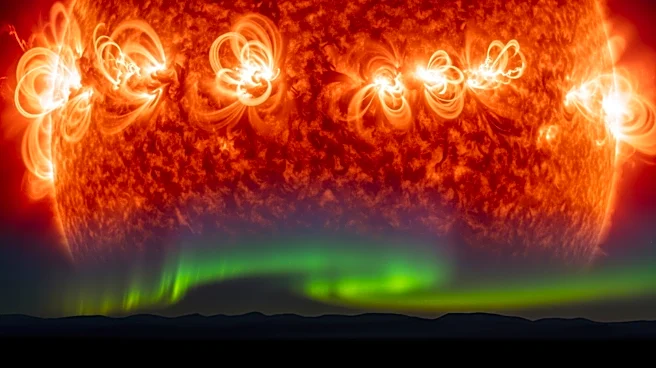
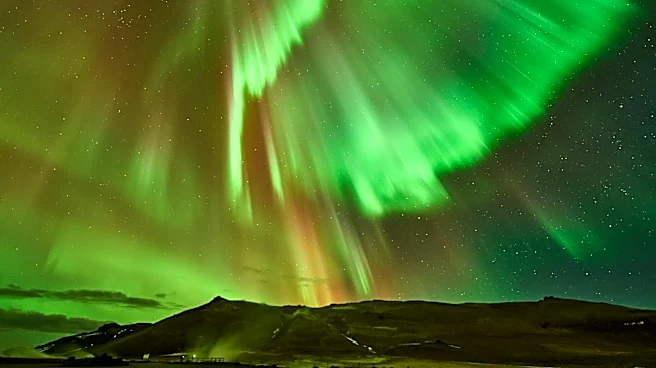
The National Oceanic and Atmospheric Administration (NOAA) has issued a G3 geomagnetic storm watch, predicting that the northern lights could be visible across New England. This phenomenon is due to a series of coronal mass ejections (CMEs) from the sun,
which are expected to interact with Earth's magnetic field. The CMEs are anticipated to arrive on Thursday afternoon and evening, potentially extending into Friday night. The best viewing times for the aurora borealis are between 10 p.m. and 2 a.m., with clear skies enhancing visibility. The storm's intensity is forecasted on a scale from G1 (minor) to G5 (extreme), with the current watch set at G3, indicating a strong geomagnetic storm.
Why It's Important?
The visibility of the northern lights in New England is a rare event, typically requiring specific atmospheric conditions. This occurrence highlights the active phase of Solar Cycle 25, which is expected to continue through 2026, potentially leading to more frequent aurora displays. The event provides an opportunity for scientific observation and public engagement with natural phenomena. It also underscores the importance of space weather forecasting, as geomagnetic storms can impact satellite operations, power grids, and communication systems.
What's Next?
As the CMEs approach, NOAA's Space Weather Prediction Center will continue to monitor the situation, providing updates on the storm's progress and potential impacts. Observers are advised to check real-time data from the Space Weather Prediction Center to optimize viewing opportunities. The ongoing solar activity suggests that similar events may occur in the future, offering further chances for observation and study.