

What's Happening?
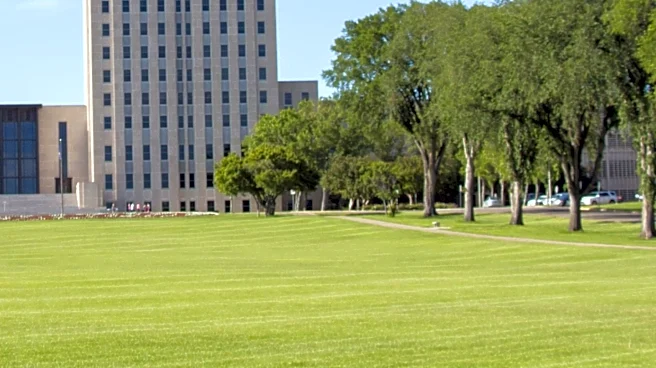
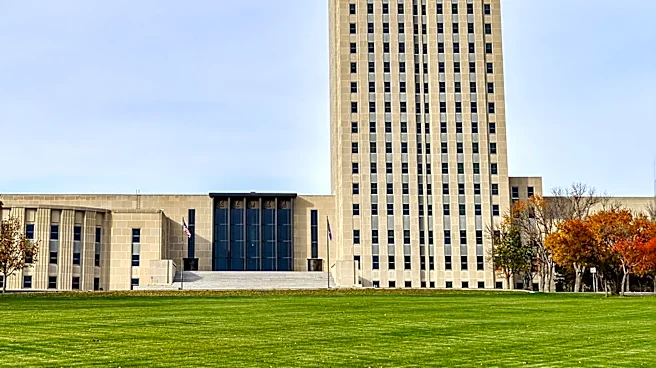
North Dakota lawmakers are convening for a second special session this year in Bismarck to tackle several pressing issues. Governor Kelly Armstrong specifically called the session to address kratom and its synthetic derivatives, which he has linked to overdoses
and deaths. The agenda also includes resolving a funding shortfall for the 70,000-square-foot, $78 million Military Gallery addition to the North Dakota Heritage Center and State Museum. Additionally, lawmakers will consider a roughly 10-month moratorium on nondisclosure agreements between industrial project developers and government officials, a concern raised by critics of data center projects. The special session is scheduled to begin on Wednesday, with public testimony available as early as Tuesday.
Why It's Important?
This special legislative session is critical for North Dakota as it addresses public health, cultural preservation, and governmental transparency. The proposed restrictions on kratom reflect a growing national concern over the substance's potential for addiction and harm, impacting public health policy and regulatory frameworks. The funding crisis for the Military Gallery highlights challenges in public-private partnerships for cultural projects and the need for robust financial oversight, potentially affecting the state's ability to honor its military history. Furthermore, the debate over nondisclosure agreements in development projects speaks to broader issues of transparency and public engagement in economic development, influencing how communities are informed and involved in significant industrial undertakings. The outcomes of these discussions will have lasting implications for North Dakota's citizens, economy, and governance.
What's Next?
The special session will commence with public testimony on Tuesday, followed by Governor Armstrong's State of the State speech on Wednesday. Lawmakers aim to conclude the session within three days, an ambitious timeline given the Labor Day weekend. Key discussions will revolve around two proposed bills concerning kratom: one restricting natural kratom to individuals 21 and older, and another prohibiting synthetic products like 7-OH. The Military Gallery funding issue will be handled by the House and Senate budget writing committees, with a proposed $35 million line of credit from the Bank of North Dakota under consideration. The moratorium on nondisclosure agreements and a bill to rectify a property tax credit change from the January special session will go to the Joint Policy Committee. The public can submit written testimony online and remote testimony will be accommodated, though with time restrictions.
Beyond the Headlines
The legislative actions in this special session could set precedents for how North Dakota, and potentially other states, manage emerging public health crises related to unregulated substances, fund large-scale public projects, and ensure transparency in economic development. The kratom debate, in particular, reflects a complex interplay between public safety concerns, individual liberties, and the scientific understanding of herbal supplements. The museum funding issue underscores the delicate balance between state support and private fundraising for cultural institutions, and the potential for political intervention in project management. The discussion on nondisclosure agreements highlights a growing demand for greater accountability and openness in government dealings with private industry, especially in the context of rapid industrial growth and its community impacts. These issues collectively point to evolving governance challenges in a dynamic socio-economic landscape.