







What's Happening?
Policymakers and technical specialists from the Eastern Caribbean recently participated in a two-day knowledge exchange in Jamaica to study its early childhood development system. Organized by the Organisation of Eastern Caribbean States (OECS) Commission,
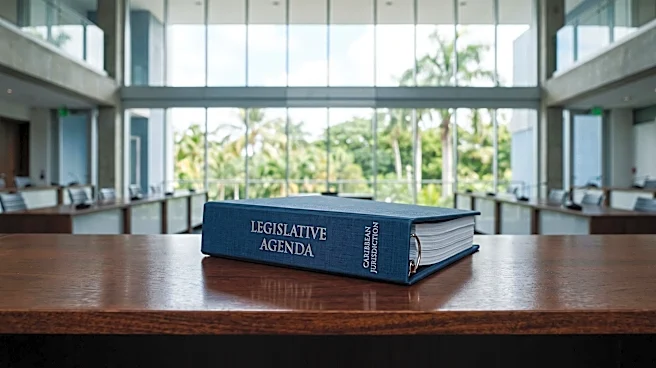
in collaboration with Jamaica's Early Childhood Commission (ECC) and the Ministry of Education, Skills, Youth and Information, the initiative aimed to strengthen early childhood education governance and service delivery across the region. The study tour, supported by UNICEF, brought together leaders and specialists from nine English-speaking OECS Member States. Participants engaged in presentations, policy discussions, and field visits to observe Jamaica's integrated approach, focusing on legislative frameworks, quality assurance, workforce development, and data utilization for policy implementation. Dr. Karlene DeGrasse Deslandes, Executive Director of the ECC, highlighted Jamaica's robust legislative frameworks, enforcement of 12 Operational Standards, and multi-sectoral collaboration with health and social security.
Why It's Important?
This knowledge exchange is crucial for advancing early childhood development in the Eastern Caribbean by providing practical models for reform. The OECS Education Sector Strategy identifies early childhood development as a foundational pillar, and the insights gained from Jamaica's system can directly inform actionable reforms in member countries. Strengthening early childhood development systems has long-term benefits, including improved outcomes for children, which can lead to enhanced human capital and socio-economic development across the region. By fostering greater collaboration among ministries responsible for education, health, labor, and social protection, the initiative aims to create more comprehensive and effective support systems for families and children. The adoption of standardized quality assurance and inter-agency synergy, as observed in Jamaica, can lead to more equitable and high-quality early childhood care throughout the Eastern Caribbean.
What's Next?
Following the study tour, participating delegations are expected to develop national action plans. These plans will outline policy, program, and regulatory improvements informed by Jamaica's experiences. The recommendations from these national plans will then contribute to a regional policy synthesis, which will be considered by OECS member governments. The ultimate goal is to strengthen their respective early childhood development systems based on the successful models and collaborative approaches observed in Jamaica. The OECS Commission will continue its broader efforts to advance the implementation of its Integrated Operations Framework for the Early Childhood Development Sector, promoting ongoing regional integration and cooperation in this critical area.
Beyond the Headlines
The collaboration between Jamaica and the OECS Member States underscores a growing recognition of the importance of early childhood development as a cornerstone for national and regional progress. Beyond immediate policy changes, this exchange fosters a culture of shared learning and mutual support among Caribbean nations. It highlights the ethical imperative to invest in the earliest stages of a child's life, recognizing that quality early childhood care and education are fundamental rights and powerful drivers of social equity and economic prosperity. The emphasis on integrated approaches, involving multiple government sectors, reflects a holistic understanding of child development that extends beyond traditional educational boundaries, encompassing health, social protection, and family well-being. This regional cooperation could set a precedent for other developing regions seeking to enhance their early childhood frameworks.