







What's Happening?
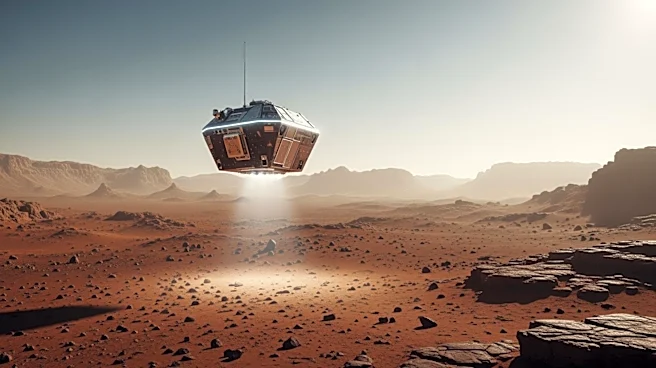
NASA has announced a partnership with Relativity Space to study Mars' atmosphere using a commercial spacecraft equipped with NASA scientific instruments. This collaboration marks the first time Mars' atmosphere will be studied in such detail, with the launch
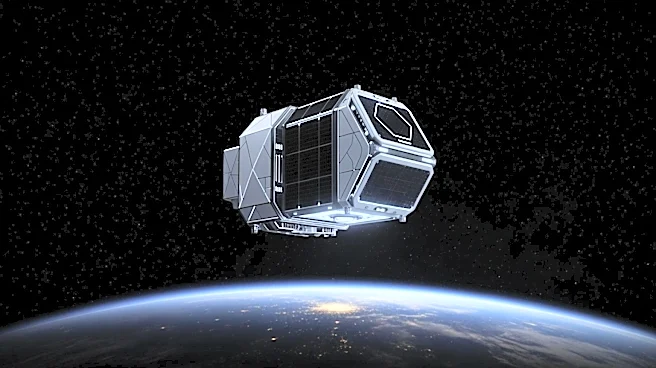
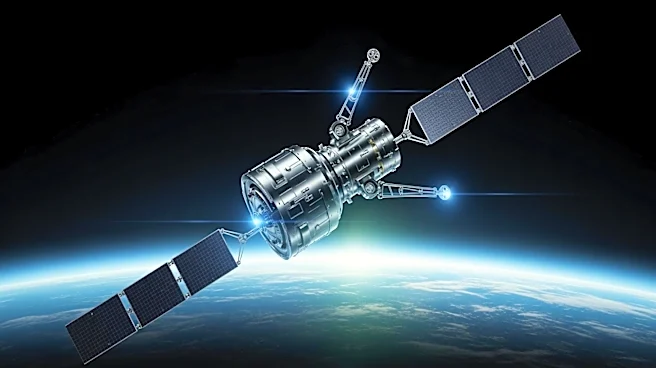
scheduled for 2028. The Aeolus science payload, developed at NASA's Ames Research Center, includes four instruments designed to provide a comprehensive daily global picture of Martian winds, temperatures, dust, and clouds. Relativity Space, responsible for the spacecraft and flight control, has yet to launch a payload into orbit, with its maiden launch of the Terran R rocket planned for late 2026.
Why It's Important?
The study of Mars' atmosphere is crucial for future crewed missions, as it presents significant engineering challenges due to its density and dust storms. The data from Aeolus will refine atmospheric models and influence the design of entry, descent, and landing systems. This partnership represents a significant step in public-private collaboration in space exploration, allowing NASA to leverage commercial capabilities without traditional government contracts. The results will be publicly available, potentially benefiting a wide range of stakeholders in the scientific community.
What's Next?
The collaboration is formalized through a Space Act Agreement, a mechanism allowing NASA to engage commercial partners. NASA will fund and maintain the scientific instruments for at least one Martian year, while Relativity Space will handle the spacecraft and flight control. The launch of the Terran R rocket, carrying the Aeolus payload, is scheduled for 2028, with ongoing work at NASA's Ames Research Center in collaboration with GATS and Xiomas Technologies.