






What's Happening?
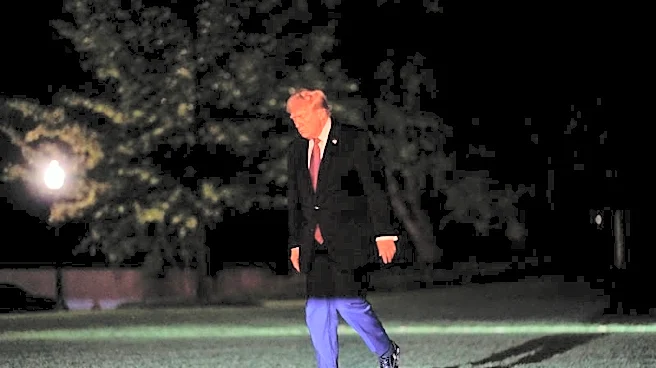
Former Vice President Kamala Harris has accused Israeli Prime Minister Benjamin Netanyahu of influencing President Trump to engage in a conflict with Iran. During a speech at a Detroit event hosted by the Michigan Democratic Women's Caucus, Harris claimed
that the war was not desired by the American public. She criticized the Trump administration, labeling it as the 'most corrupt, callous, and incompetent' in U.S. history. Harris also alleged that Trump used military operations, such as Operation Epic Fury, as distractions from domestic issues like the Epstein files. She further criticized Trump for abandoning America's responsibility to maintain alliances and uphold international norms.
Why It's Important?
Harris's accusations highlight ongoing tensions and criticisms regarding U.S. foreign policy under the Trump administration. Her remarks suggest a significant deviation from traditional U.S. diplomatic practices, potentially affecting international relations and America's global standing. The allegations also underscore domestic political divides, as Harris positions the Democratic Party against what she perceives as the failures of the Trump administration. This narrative could influence voter sentiment and impact upcoming elections, as foreign policy and military engagement remain critical issues for the American electorate.
What's Next?
The implications of Harris's statements may lead to further scrutiny of the Trump administration's foreign policy decisions, particularly regarding Iran. Political leaders and analysts may debate the validity and impact of Netanyahu's influence on U.S. actions. Additionally, these accusations could fuel partisan debates as the Democratic Party seeks to leverage these criticisms in future electoral campaigns. The response from Republican leaders and Trump supporters will likely shape the discourse around U.S. foreign policy and its alignment with international allies.