





What's Happening?
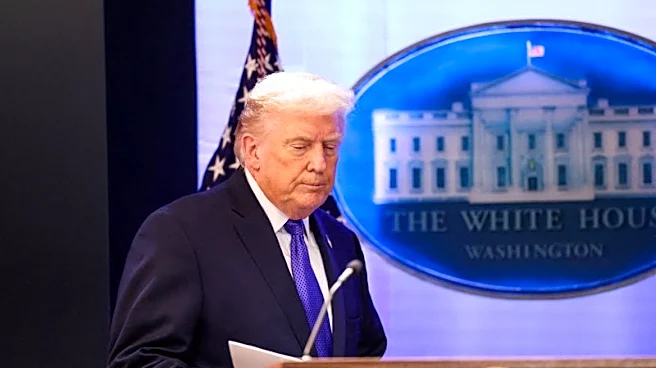
The United States has announced plans to impose a 12.5% tariff on Australian exports, citing Australia's failure to prevent the importation of goods made using forced labor. This move is part of a broader U.S. strategy targeting over 50 countries for similar
alleged failures. U.S. trade representative Jamieson Greer described the situation as 'unacceptable,' arguing that it forces American workers to compete on an uneven playing field. The Australian Human Rights Institute's director, Justine Nolan, acknowledged the U.S. action as a mix of trade politics and genuine concern, noting that Australia's modern slavery laws, established in 2018, have not kept pace with international standards. Nolan emphasized the need for Australia to implement a forced labor import ban similar to those in the U.S. and EU to prevent becoming a 'dumping ground' for slave-made goods.
Why It's Important?
The U.S. tariff threat underscores significant gaps in Australia's modern slavery framework, which could have economic and ethical implications. If implemented, the tariffs could impact Australian exports, affecting industries reliant on U.S. markets. The situation also highlights the global shift towards stricter enforcement of labor standards in supply chains, pressuring countries to enhance their regulatory frameworks. For Australia, failing to address these issues could lead to reputational damage and economic losses. The U.S. action serves as a wake-up call for Australia to strengthen its laws to align with international norms, potentially influencing other countries to follow suit.
What's Next?
Australia may need to consider revising its modern slavery laws to include enforceable measures against forced labor imports. This could involve legislative changes to introduce a forced labor import ban, similar to those in the U.S. and EU. Such measures would require collaboration between government, industry, and civil society to ensure effective implementation. The Australian government might also engage in diplomatic discussions with the U.S. to negotiate terms and potentially avoid the tariffs. The outcome of these actions could set a precedent for how countries address forced labor in global supply chains.