







What's Happening?
The U.S. Space Force is establishing a new Mission Operations Center (MOC) to integrate and coordinate various satellite networks from different providers. This hub, developed by Space Systems Command in collaboration with Golden Dome for America, aims
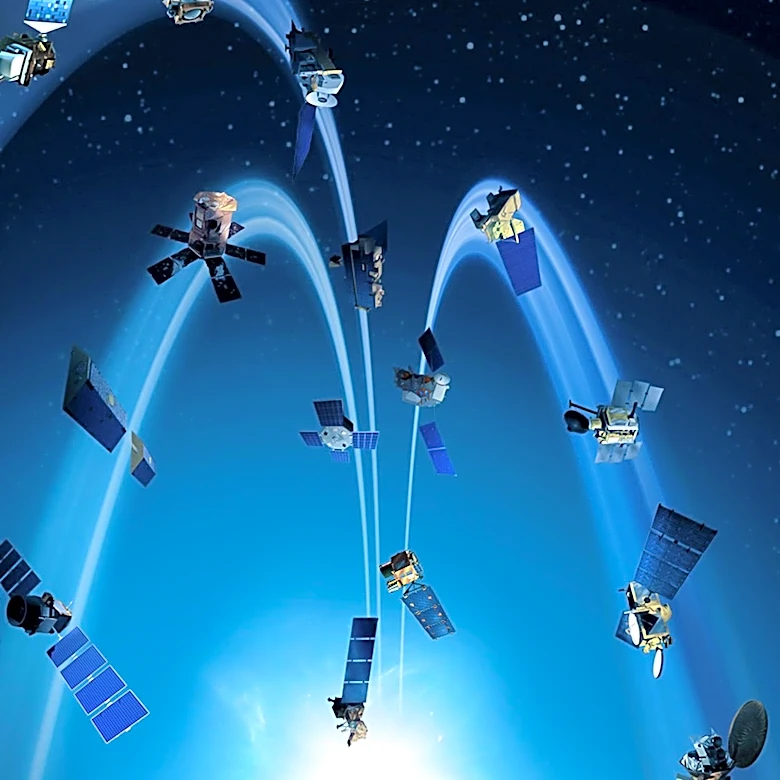
to support military operations across air, land, sea, and space. Viasat has been awarded an initial $115 million task order, part of a larger $450 million contract, to design, deploy, and expand this center. The MOC will serve as the ground hub for the Space Data Network Backbone, a component of the Space-Based Sensing and Targeting portfolio. Its primary function is to bring together network and mission systems, enabling operators to manage data traffic across multiple satellite constellations from a single location. The network is designed for secure, high-speed connections with minimal delay, allowing real-time redirection of traffic based on changing mission priorities. This integration of systems from various suppliers is intended to enhance resilience by reducing the risk of communication disruptions due to a single point of failure.
Why It's Important?
This new operations center is crucial for enhancing the U.S. military's command, control, and communication capabilities in space. By integrating diverse satellite networks, the Space Force aims to achieve a more unified and resilient space architecture, which is vital for modern warfare and homeland defense. The ability to rapidly combine data from different sensors and redirect traffic in real-time will significantly improve the military's capacity to detect, track, and defeat advanced missile and aerial threats, particularly through programs like Golden Dome. This initiative also promotes an open architecture approach, allowing systems from various suppliers—including Amazon LEO for Government, Lockheed Martin, Northrop Grumman, Rocket Lab, and York Space Systems—to work together seamlessly. This reduces vendor lock-in and fosters innovation within the defense industrial base. The MOC's role in ensuring secure, high-speed data delivery with minimal delay directly supports critical national security objectives, providing a decisive advantage in an increasingly contested space domain.
What's Next?
Viasat will proceed with the design, deployment, and expansion of the Mission Operations Center under the awarded task order. The Space Systems Command will continue to oversee the integration of diverse space data transport and exchange systems into this central hub. Future efforts will focus on ensuring seamless interoperability between various satellite constellations and ground systems from multiple providers. The MOC's development will likely involve continuous testing and refinement to optimize its ability to manage real-time data traffic and adapt to evolving mission requirements. As the center becomes operational, it will play a critical role in supporting the Golden Dome program, enhancing the integration of sensors, command systems, and defensive weapons. The success of this center could also influence future procurement strategies and architectural designs for military space systems, emphasizing integrated, multi-provider solutions.
Beyond the Headlines
The establishment of this integrated operations center reflects a broader strategic shift within the U.S. Space Force towards a more networked and resilient space infrastructure. This move acknowledges the increasing complexity and proliferation of space assets, both military and commercial, and the necessity of a unified command and control system to manage them effectively. The emphasis on an open architecture signals a departure from proprietary, siloed systems, fostering greater collaboration and competition among defense contractors. This approach could also set a precedent for international partnerships, potentially allowing allied nations to integrate their space assets into a broader, secure network in the future. Ethically, the enhanced capability to detect and track threats raises questions about the implications for global stability and the potential for an arms race in space, as adversaries may seek to develop similar integrated systems. Legally, the coordination of diverse satellite networks across multiple providers could necessitate new frameworks for data sharing, security protocols, and operational responsibilities in the increasingly crowded orbital environment.