



What's Happening?
AES Andes, a Chilean energy company, has announced the cancellation of its INNA project, a large-scale green energy plant planned near the Paranal Observatory in the Atacama Desert. The project faced significant opposition from the astronomical community
due to concerns about light pollution and atmospheric disturbances that could have severely impacted the observatory's operations. The Paranal Observatory is home to some of the world's most advanced telescopes, including the Very Large Telescope (VLT) and the upcoming Extremely Large Telescope (ELT). The proposed facility, which aimed to produce green hydrogen and ammonia, was expected to increase light pollution by 35% over the VLT and 55% over the Cherenkov Telescope Array South site. Additionally, the project's wind turbines posed a threat to the atmospheric stability crucial for astronomical observations.
Why It's Important?
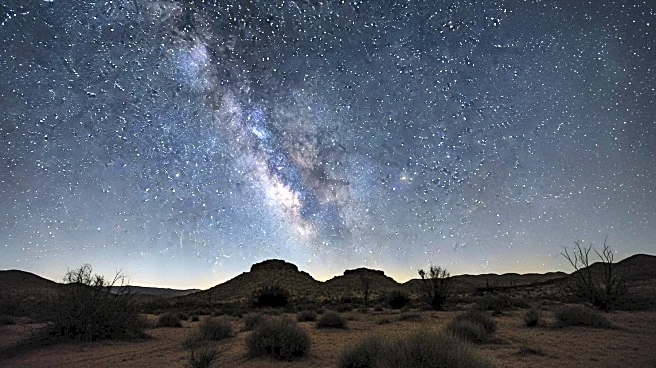
The cancellation of the INNA project is a significant victory for the preservation of dark skies, which are essential for astronomical research. The Paranal Observatory's location in the Atacama Desert is one of the few remaining places on Earth with minimal light pollution, making it invaluable for observing the universe. The decision underscores the importance of balancing industrial development with environmental and scientific considerations. By halting the project, AES Andes has acknowledged the need to protect these unique conditions, which are critical for advancing our understanding of the cosmos. This move also highlights the growing awareness and advocacy for dark sky preservation, which is crucial for the future of astronomy.
What's Next?
While AES Andes has decided to cancel the INNA project, the company plans to focus on developing its renewable energy and energy storage portfolio. This shift aligns with the guidelines of its parent company in the United States. The decision may prompt further discussions between the energy sector and the scientific community to ensure that future projects do not compromise astronomical research. The European Southern Observatory (ESO) and its member states continue to support energy decarbonization efforts, provided they are compatible with the needs of astronomical observatories. This situation may serve as a precedent for how industrial and scientific interests can coexist sustainably.
Beyond the Headlines
The cancellation of the INNA project raises broader questions about the relationship between industrial development and environmental conservation. It highlights the need for industries to consider the ecological and scientific impacts of their projects, especially in sensitive areas. The case also emphasizes the role of public and scientific advocacy in influencing corporate decisions. As the demand for renewable energy grows, finding ways to integrate these projects with existing environmental and scientific priorities will be crucial. This development may encourage more collaborative approaches to planning and implementing large-scale industrial projects in the future.