
What's Happening?
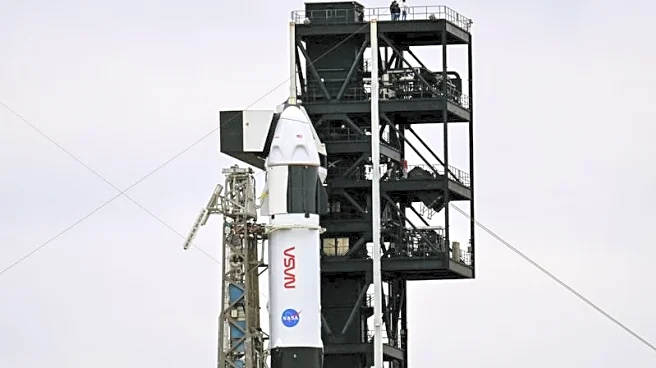
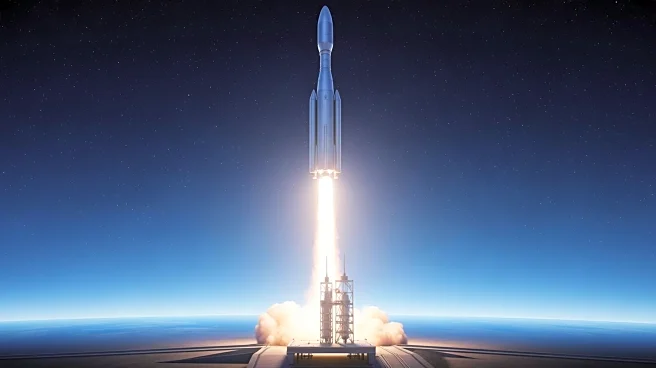
SpaceX is launching the Crew-12 mission to the International Space Station (ISS) for NASA. The launch is scheduled for February 13 at 5:15 a.m. EST. The Crew Dragon capsule, named 'Freedom,' is expected
to dock with the ISS on February 14 at approximately 3:15 p.m. EST. The mission is commanded by NASA astronaut Jessica Meir, with Jack Hathaway as the pilot. The mission specialists include Sophie Adenot from the European Space Agency and Russian cosmonaut Andrey Fedyaev. This mission marks the first space journey for Adenot and Hathaway, while Meir and Fedyaev are on their second spaceflight. The astronauts will stay aboard the ISS for about nine months, conducting scientific research, technology demonstrations, and maintenance operations. Their arrival will restore the ISS to its standard crew of seven astronauts, following a period of reduced crew operations.
Why It's Important?
The Crew-12 mission underscores the ongoing international collaboration in space exploration, involving NASA, the European Space Agency, and Russian space agencies. This mission is significant as it continues the tradition of multinational crews working together on the ISS, fostering scientific and technological advancements. The extended nine-month mission duration allows for more comprehensive research and experiments, potentially leading to breakthroughs in various scientific fields. The mission also highlights SpaceX's role in providing reliable transportation to the ISS, reinforcing its position as a key player in the commercial space industry. The successful execution of such missions can influence future space policy and funding, encouraging further investment in space exploration and technology development.
What's Next?
Following the successful docking of Crew-12, the astronauts will begin their scheduled activities aboard the ISS. Their extended stay will allow for a broader range of experiments and maintenance tasks, contributing to the station's ongoing operations and scientific output. The mission's progress will be closely monitored by NASA and its international partners, with potential implications for future crewed missions and collaborations. The outcomes of their research could influence future space missions and the development of new technologies. Additionally, the mission's success may impact future policy decisions regarding international space cooperation and funding allocations for space exploration initiatives.