



What's Happening?
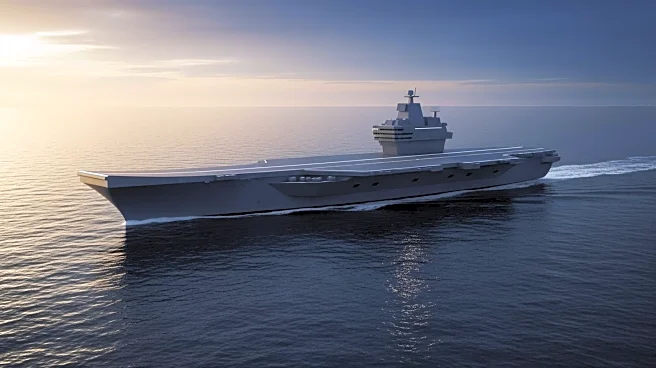
The French government has approved the construction of a new nuclear-powered aircraft carrier, the Porte-Avions Nouvelle Génération (PA-Ng), to replace the current Charles de Gaulle carrier. Announced by President Emmanuel Macron during a visit to a French military
base in Abu Dhabi, the new carrier is expected to enter service in 2038. The project is part of a broader initiative to increase defense spending and enhance France's maritime capabilities. The PA-Ng program, which began its design phase in December 2020, is estimated to cost around EUR11 billion (USD12.9 billion). The Direction générale de l'armement (DGA) and the industrial prime contractor MO Porte-Avions, a joint venture of Naval Group and Chantiers de l'Atlantique, are responsible for the design and system development of the carrier.
Why It's Important?
The decision to build a new aircraft carrier underscores France's commitment to maintaining and enhancing its maritime power. This move is significant in the context of global naval capabilities, as it positions France to remain a key player in international maritime security. The increased defense spending aligns with President Macron's broader strategy to bolster national security and military readiness. The new carrier will enhance France's ability to project power globally, support international missions, and contribute to NATO operations. The investment also reflects a strategic response to evolving global threats and the need for advanced military technology.
What's Next?
The PA-Ng program will continue through its design and development phases, with construction expected to commence following the completion of these stages. The French government will likely engage in further discussions with defense contractors to finalize the technical specifications and timelines. As the project progresses, there may be increased scrutiny from political and public stakeholders regarding the cost and strategic implications of the new carrier. Additionally, France's defense industry is expected to benefit from the project, potentially leading to job creation and technological advancements.