
What's Happening?
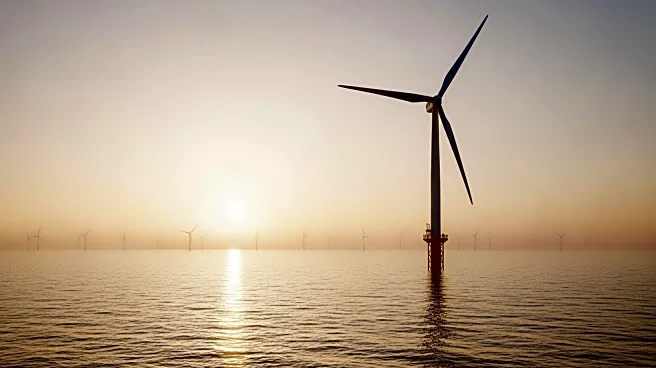
The UK Government has granted planning consent for the 1GW Five Estuaries Offshore Wind Farm, an extension of the existing Galloper Wind Farm off the coast of Harwich, Essex. This project, developed by
a consortium including RWE, Macquarie, ESB, and Sumitomo Corporation, is expected to generate enough electricity to power one million UK homes. The government has also introduced a Marine Recovery Fund to finance ecosystem conservation projects, which will be supported by offshore wind developers. This initiative is part of a broader strategy to increase the UK's offshore wind capacity to over 43GW by 2030, aligning with the goal of reducing gas to less than 5% of the electricity generation mix.
Why It's Important?
The development of the Five Estuaries Offshore Wind Farm and the introduction of the Marine Recovery Fund are significant steps in the UK's transition to renewable energy. By increasing offshore wind capacity, the UK aims to reduce its reliance on fossil fuels, contributing to global efforts to combat climate change. The Marine Recovery Fund also addresses environmental concerns by financing projects that protect marine ecosystems, such as seabird nesting structures and seabed restoration. This dual focus on clean energy and environmental conservation highlights the UK's commitment to sustainable development, potentially setting a precedent for other nations.
What's Next?
The project team will now focus on developing skills and supply chain strategies, as well as completing detailed design elements before making a final investment decision. The UK Government's commitment to expanding offshore wind capacity and creating new Marine Protected Areas will likely lead to further policy developments and investments in renewable energy. Stakeholders, including environmental groups and energy companies, will be closely monitoring the implementation of the Marine Recovery Fund and its impact on both energy production and marine conservation.
Beyond the Headlines
The integration of renewable energy projects with environmental conservation efforts could lead to a new model of sustainable development. By addressing the ecological impacts of offshore wind farms, the UK is attempting to balance energy needs with biodiversity protection. This approach may influence future energy policies and conservation strategies globally, as countries seek to meet climate targets while preserving natural habitats.