





What's Happening?
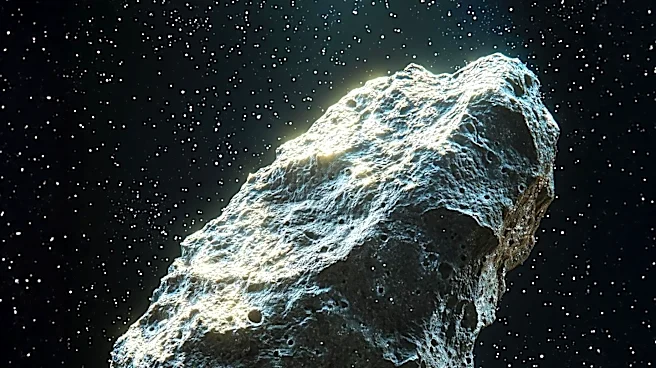
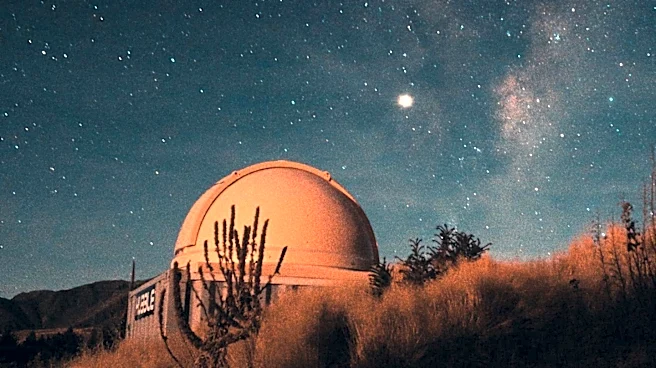
Asteroid (44) Nysa, one of the brightest and largest E-type asteroids in the main belt, has been revealed to potentially be a three-lobed world. This discovery was made using advanced imaging techniques with the SHARK-VIS instrument on the Large Binocular
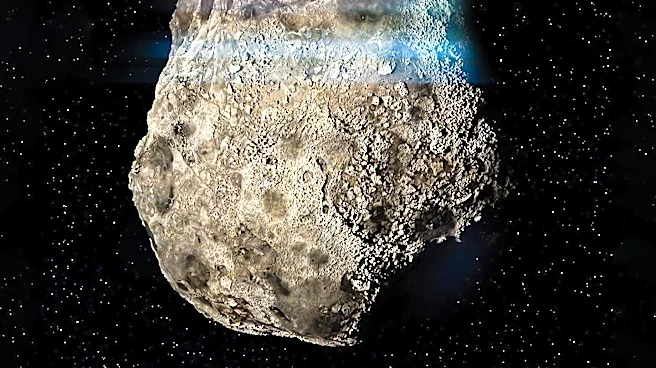
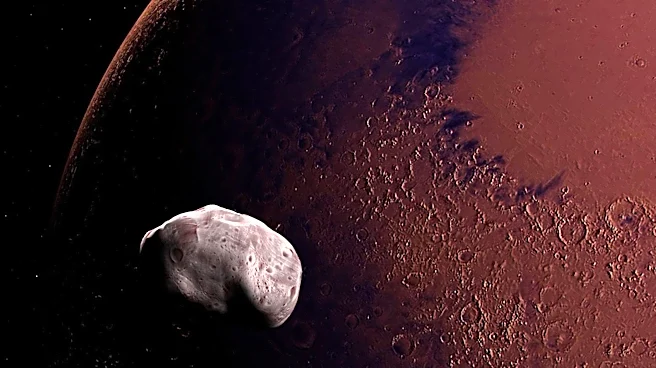
Telescope in Arizona and the SPHERE/ZIMPOL on the Very Large Telescope in Chile. The images show two prominent valleys that suggest Nysa may consist of three separate bodies that have come together. This configuration, if confirmed, would make Nysa the first known contact trinary asteroid. Additionally, a small moon orbiting Nysa was detected, which could provide further insights into the asteroid's mass and density.
Why It's Important?
The discovery of Nysa's potential three-lobed structure is significant for planetary science as it could provide new insights into the formation and evolution of asteroids. Understanding whether Nysa is a contact trinary or a single body with unique features could help scientists learn more about the processes that shaped the early solar system. The presence of a moon also offers a unique opportunity to study the asteroid's physical properties, which could distinguish between a solid rock and a loose assembly of debris. This research could contribute to broader knowledge about the building blocks of planets and the history of our solar system.
What's Next?
Further observations and analyses will be necessary to confirm the nature of Nysa's structure. Scientists will likely focus on tracking the orbit of the newly discovered moon to determine Nysa's mass and density. These measurements could help resolve whether Nysa is indeed a contact trinary or a uniquely shaped single body. The findings could also prompt additional studies of other E-type asteroids to see if similar structures exist elsewhere. The results of this research could have implications for our understanding of asteroid formation and the history of planetary development.