







What's Happening?
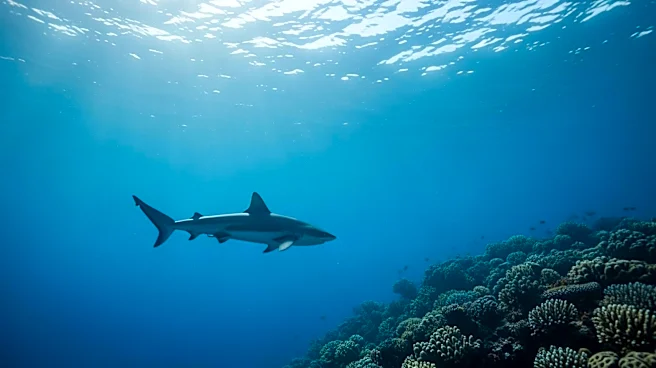
In 2025, the United States recorded the highest number of unprovoked shark bites globally, with 25 confirmed cases, including one fatality. This data comes from the International Shark Attack File at the Florida Museum of Natural History, which tracks
shark-human interactions annually. Florida remains a hotspot, accounting for 11 incidents, with Volusia County alone responsible for more than half of these cases. The report distinguishes between 'unprovoked' bites, where humans do not initiate interaction, and 'provoked' bites, which involve human actions like touching or feeding sharks. Despite the dramatic nature of shark bite incidents, the overall number of unprovoked bites globally, 65 in 2025, remains close to the recent five-year average of 61. However, fatalities increased slightly, with 12 shark-related deaths worldwide, nine of which were unprovoked.
Why It's Important?
The report underscores the importance of understanding shark behavior and the environmental conditions that lead to human-shark interactions. The increase in fatalities, despite a stable number of bites, suggests that changing ocean conditions and human activities are significant factors. The data highlights the need for effective beach safety measures, especially in regions like Australia, which recorded five unprovoked fatalities but is noted for its rapid response capabilities. The findings also emphasize the role of conservation efforts, as successful protection of shark populations may lead to more frequent encounters with humans. This situation calls for balanced approaches that ensure human safety while maintaining healthy marine ecosystems.
What's Next?
Future efforts will likely focus on enhancing public education about shark safety and investing in non-lethal risk-reduction tools. Governments at various levels may need to increase funding for monitoring programs and develop strategies to coexist with recovering shark populations. The report suggests that as predator populations recover, sightings near popular beaches may increase, necessitating adaptive management strategies. Public awareness campaigns could play a crucial role in reducing the risk of shark bites by educating beachgoers on safe practices, such as avoiding swimming at dawn or dusk and staying away from fishing areas.
Beyond the Headlines
The report raises broader questions about human expectations of ocean use and the need for coexistence with marine wildlife. As shark populations recover due to conservation efforts, humans must adapt to sharing ocean spaces responsibly. This includes recognizing the ecological importance of sharks in marine food webs and the challenges of balancing human recreation with wildlife conservation. The findings suggest a shift in perspective is needed, from attempting to eliminate shark encounters to understanding and managing them effectively.