







What's Happening?
Princess Diana suspected that Prince Charles had a secret rendezvous with Camilla Parker Bowles on the royal train just months before their wedding, according to her brother Earl Spencer's new memoir, 'Swan Song: Diana, My Sister'. The book details a 1980
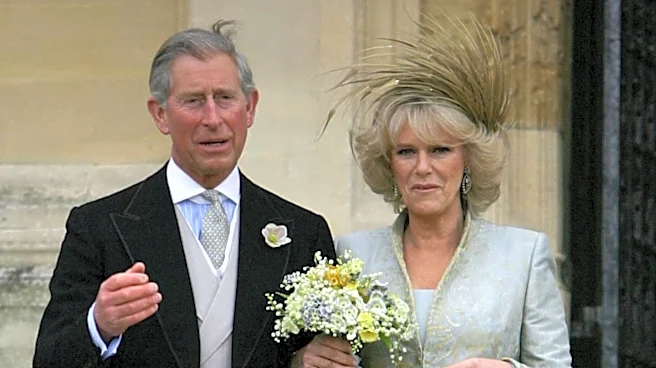
tabloid expose, known as the 'Royal Train Scandal,' which reported that a blonde woman had been seen boarding the royal train for a secret assignation with Prince Charles. While tabloids initially assumed it was Diana, she was reportedly 50 miles away and had never been invited onto the train. Earl Spencer writes that Diana later became convinced the woman was Camilla Parker Bowles, especially since the railway siding was only 19 miles from Camilla's home. The memoir also mentions Diana discovering a bracelet for Camilla shortly after her engagement to Charles in 1981. Prince Charles publicly admitted to adultery during his marriage in a 1994 televised interview, stating their relationship had 'irretrievably broken down.' The couple separated in 1992 and divorced in 1996. Camilla Parker Bowles married Charles in 2005.
Why It's Important?
This revelation from Earl Spencer's memoir reignites public discussion about the early dynamics of Prince Charles and Princess Diana's relationship and the long-standing presence of Camilla Parker Bowles. It underscores the deep-seated issues and suspicions that plagued their marriage from its inception, providing further context to the widely publicized difficulties and eventual breakdown of their union. The ongoing public fascination with Princess Diana's life and the royal family means that such claims continue to shape public perception of King Charles III and Queen Camilla. For the monarchy, these historical accounts, even decades later, can influence public sentiment and potentially impact the institution's image, particularly among those who remember the events of the 1980s and 1990s. The memoir's details contribute to the historical narrative surrounding one of the most scrutinized royal marriages, highlighting the personal struggles behind the public facade.
What's Next?
The release of Earl Spencer's memoir is likely to continue generating significant media attention and public discussion, particularly given the ongoing interest in Princess Diana's life and legacy. Buckingham Palace has issued a statement in response to claims made in the memoir, indicating that while they do not comment on books as a matter of principle, 'His Majesty is mindful that the pain of fraternal grief can cloud reason, affect judgment and colour memory in ways others do not recognise, even many years after such a loss.' This suggests a cautious approach from the royal family, aiming to acknowledge the emotional context without directly engaging with specific allegations. The memoir's details may also prompt further analysis and commentary from royal historians and biographers, potentially leading to new interpretations or renewed focus on existing historical accounts of the royal family's past. The public's reaction will likely be a mix of renewed sympathy for Diana and continued scrutiny of King Charles and Queen Camilla.
Beyond the Headlines
The claims in Earl Spencer's memoir delve into the profound psychological impact of public life and marital infidelity on individuals within the royal family. Diana's suspicion of a 'nighttime tryst' and the discovery of a bracelet for Camilla highlight the emotional distress and sense of betrayal she experienced early in her relationship with Prince Charles. This narrative contributes to a broader understanding of the pressures faced by public figures, particularly those in highly scrutinized roles like the monarchy, where personal lives are often inseparable from public duty. The enduring public interest in these historical events, decades after they occurred, reflects a societal fascination with the human drama behind royal titles and the ethical considerations of privacy versus public transparency. It also underscores how personal narratives, especially those involving infidelity and betrayal, can shape historical perceptions and cultural memory for generations.