









What's Happening?
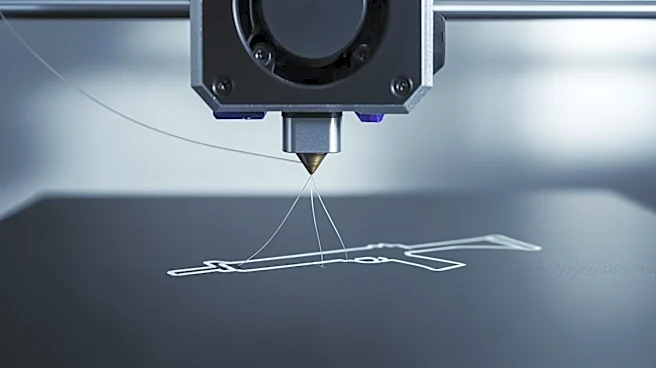
A new law in New York aims to prevent the production of untraceable 'ghost guns' by requiring 3D printers sold for home and business use to include technology that blocks the printing of firearms. This legislation, which is also being considered in California,
seeks to address the growing issue of homemade guns that lack serial numbers and evade background checks. The law targets the equipment used to produce these firearms rather than the individuals making them. The initiative could set industry standards for 3D printers and serve as a model for other states looking to enhance gun regulations. The technology would involve algorithms that detect and block firearm blueprints, although its feasibility and impact on privacy and constitutional rights are under debate.
Why It's Important?
The rise of 3D-printed firearms poses significant challenges for law enforcement and public safety, as these weapons are difficult to trace and regulate. The new law represents a proactive approach to curbing the spread of ghost guns, which have been increasingly used in crimes. By focusing on the technology used to create these firearms, the legislation could influence national standards and inspire similar measures in other states. However, the effectiveness of such technology is uncertain, and there are concerns about potential overreach and the impact on personal privacy and constitutional rights. The outcome of this initiative could have far-reaching implications for gun control and the regulation of emerging technologies.
What's Next?
The implementation of the law will involve a study to develop standards for firearm blueprint detection algorithms, with the mandate for 3D printers to include this technology not taking effect until 2029. The study will assess the feasibility of the technology and its potential impact on privacy and legal rights. As the legislation progresses, it is likely to face challenges from gun rights advocates and privacy groups. The debate will continue over the balance between public safety and individual freedoms, and the effectiveness of the technology in preventing the production of ghost guns will be closely monitored.
Beyond the Headlines
The introduction of this law highlights the broader issue of regulating emerging technologies that can be used for both beneficial and harmful purposes. The challenge lies in creating regulations that effectively address public safety concerns without stifling innovation or infringing on individual rights. The debate over 3D-printed firearms also raises questions about the evolving nature of gun rights and the role of technology in shaping these discussions. As technology continues to advance, similar regulatory challenges are likely to arise in other areas, necessitating a careful balance between innovation and regulation.