








What's Happening?
The United States has significantly increased its military presence in Europe, deploying or extending approximately 20,000 additional personnel since February 2022. This surge brings the total U.S. force posture in Europe to roughly 100,000 personnel.
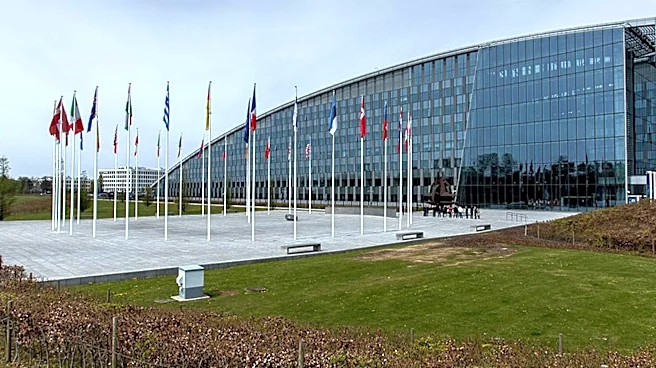
Concurrently, NATO has expanded its forces under direct command on its eastern flank, growing from approximately 5,000 to 40,000 personnel. This includes the deployment of multinational battlegroups and enhanced readiness measures. These actions are part of a broader effort to strengthen deterrence and collective defense, particularly in Central and Eastern Europe, in response to ongoing security concerns. Despite this substantial buildup, NATO officials indicate no evidence of an imminent Russian attack, emphasizing that the focus remains on defensive planning and deterrence rather rather than anticipating large-scale Russian combat deployments along NATO’s borders.
Why It's Important?
This increased U.S. and NATO military presence underscores a significant shift in European security dynamics, directly impacting U.S. foreign policy and defense strategy. The reinforcement of the eastern flank aims to deter potential aggression and reassure NATO allies, particularly those bordering Russia. For the U.S., this involves substantial financial and logistical commitments, influencing defense spending and resource allocation. The expanded force posture also strengthens military cooperation within NATO, enhancing interoperability and collective defense capabilities. This move is crucial for maintaining stability in a volatile region and signals a robust commitment to the security of alliance members. The emphasis on deterrence, rather than immediate conflict, highlights a strategic approach to managing geopolitical tensions and preventing escalation, which is vital for global stability and U.S. national interests.
What's Next?
The continued focus will likely be on maintaining and further enhancing the readiness and capabilities of the deployed forces. Discussions may involve the potential for more permanent U.S. military installations in countries like Poland, as suggested by some reports, to solidify long-term deterrence. This could entail further infrastructure development and increased military exercises to integrate new personnel and equipment. Political leaders and defense officials will continue to monitor the geopolitical landscape, particularly Russian activities, to adapt strategies as needed. The ongoing military and security assistance to Ukraine will also remain a critical component of the broader U.S. and NATO strategy, influencing the scale and nature of future deployments and defense initiatives on the eastern flank.
Beyond the Headlines
The military buildup on NATO's eastern flank carries deeper implications beyond immediate deterrence. It signifies a re-evaluation of post-Cold War security architecture in Europe, emphasizing collective defense against perceived threats. This shift could lead to long-term changes in military doctrine, procurement, and alliance structures. Ethically, it raises questions about the balance between deterrence and potential escalation, and the impact of a heightened military presence on regional stability. Culturally, it may foster stronger bonds between U.S. service members and host nations, but also potentially increase anxieties in border regions. Economically, the sustained military presence and potential for new bases could stimulate local economies in host countries through defense spending and job creation, while also imposing significant costs on U.S. taxpayers. This strategic recalibration reflects a complex interplay of security, economic, and political factors shaping the future of transatlantic relations.