
What's Happening?
Prime Minister Benjamin Netanyahu stated in a CBS News interview that the conflict with Iran is 'not over', despite a ceasefire. He emphasized the need to remove Iran's enriched uranium and dismantle its
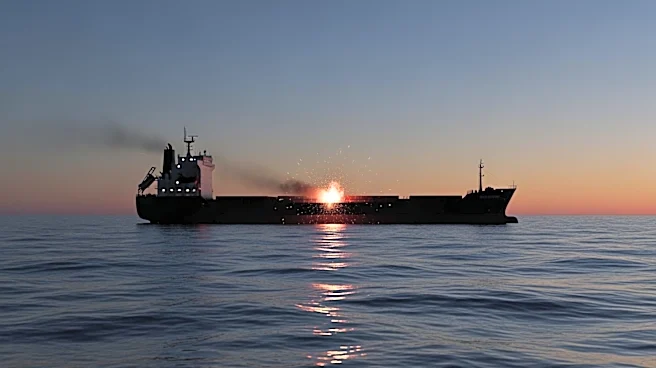
nuclear facilities. Netanyahu declined to specify whether military force would be used if diplomacy fails. The interview comes amid ongoing tensions in the Persian Gulf, with recent drone attacks on commercial ships. Iran has responded to U.S. ceasefire proposals, seeking to focus negotiations on regional stability rather than its nuclear program. The U.S. and Iran are engaged in diplomatic efforts, mediated by Pakistan and Qatar, to reach a temporary agreement to pause hostilities and reopen the Strait of Hormuz.
Why It's Important?
The ongoing conflict with Iran has significant implications for regional and global security, particularly concerning nuclear proliferation and maritime security in the Persian Gulf. Netanyahu's comments highlight the challenges in achieving a lasting resolution, with potential impacts on international relations and economic stability. The involvement of multiple countries in mediation efforts underscores the complexity of the situation and the importance of diplomatic solutions. The conflict affects global oil markets and trade routes, with potential repercussions for energy prices and economic growth.
What's Next?
Diplomatic efforts will continue as the U.S. and Iran seek to negotiate a temporary agreement to halt hostilities and address nuclear concerns. The outcome of these negotiations will influence regional stability and international relations. The U.S. may consider military options if diplomacy fails, potentially escalating the conflict. The situation in the Persian Gulf will remain a focal point for international security and economic interests, with ongoing monitoring of maritime activities and potential threats.