


What's Happening?
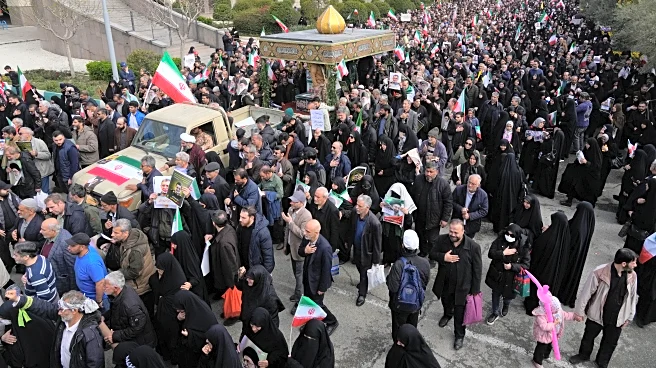
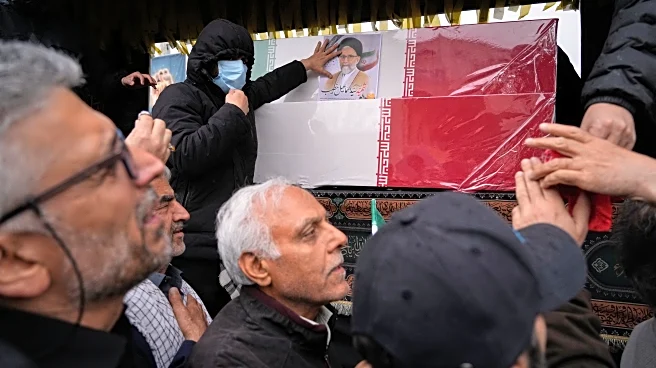
Iran is experiencing a significant power vacuum following the assassination of its top leaders, including Supreme Leader Ayatollah Ali Khamenei and Ali Larijani, the secretary of Iran’s Supreme National Security Council. Mojtaba Khamenei, the son of the late
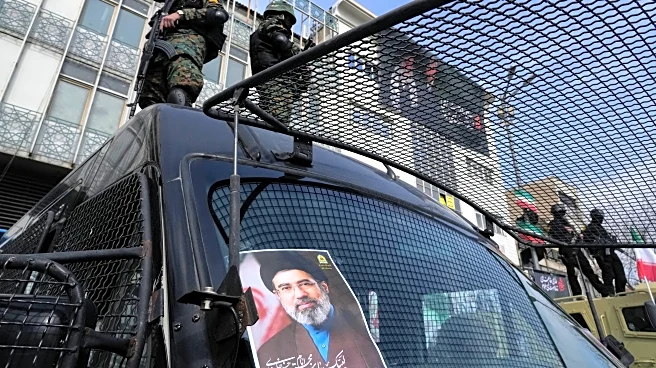
Ayatollah, has been named the new supreme leader, but his authority is questioned due to his secretive nature and lack of public presence. The Revolutionary Guard, a powerful paramilitary force, is believed to be the de facto power in Iran, as the country's command structure is in chaos. The situation has led to concerns about the stability of Iran's theocracy and the potential for gradual changes in its governance.
Why It's Important?
The assassination of Iran's top leaders has significant implications for regional stability and international relations. The power vacuum could lead to internal strife and a shift in Iran's foreign policy, particularly concerning its nuclear program and relations with Israel and the United States. The Revolutionary Guard's increased influence may result in more aggressive military postures, affecting global oil markets and security in the Middle East. The situation also highlights the potential for long-term changes in Iran's political landscape, which could alter the balance of power in the region.
What's Next?
The international community is closely monitoring Iran's internal dynamics to assess the potential for further instability. The United States and Israel may adjust their strategies in response to the changing power structure in Iran. The Revolutionary Guard's role will be crucial in determining Iran's future actions, both domestically and internationally. Observers anticipate that the full impact of these leadership changes will unfold over time, potentially leading to a reconfiguration of alliances and power structures in the Middle East.
Beyond the Headlines
The current situation in Iran underscores the complexities of leadership transitions in authoritarian regimes. The reliance on a single leader or a small group of elites can create vulnerabilities that adversaries may exploit. The events in Iran may serve as a case study for other nations with similar governance structures, highlighting the importance of institutional resilience and the risks associated with concentrated power.