






What's Happening?
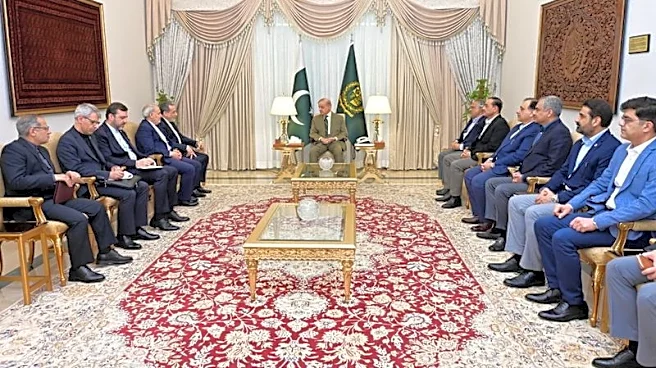
President Trump's envoys, Steve Witkoff and Jared Kushner, are set to travel to Pakistan to engage in talks with Iran's Foreign Minister Abbas Araghchi. This diplomatic mission aims to address ongoing tensions related to the Strait of Hormuz and nuclear
issues. Despite Iran's Foreign Minister already being in Pakistan, there are no confirmed plans for a direct meeting between the U.S. and Iranian officials. The visit underscores the Trump administration's efforts to mediate and potentially ease geopolitical tensions in the region, although the absence of a scheduled meeting highlights the complexities involved.
Why It's Important?
The talks are significant as they represent a continued effort by the U.S. to engage with Iran amidst strained relations. The Strait of Hormuz is a critical chokepoint for global oil shipments, and any conflict in this area could have severe implications for international oil markets and global economic stability. The involvement of high-profile envoys like Kushner and Witkoff indicates the importance the Trump administration places on these discussions. Successful negotiations could lead to a de-escalation of tensions, benefiting not only the U.S. and Iran but also global stakeholders reliant on stable oil prices and regional security.
What's Next?
While no direct meeting is planned, the presence of U.S. envoys in Pakistan suggests potential back-channel communications or indirect negotiations could occur. The outcome of these talks may influence future diplomatic strategies and could lead to further engagements or adjustments in U.S. foreign policy towards Iran. Observers will be watching for any statements or developments that might indicate a shift in the current impasse or a breakthrough in negotiations.