







What's Happening?
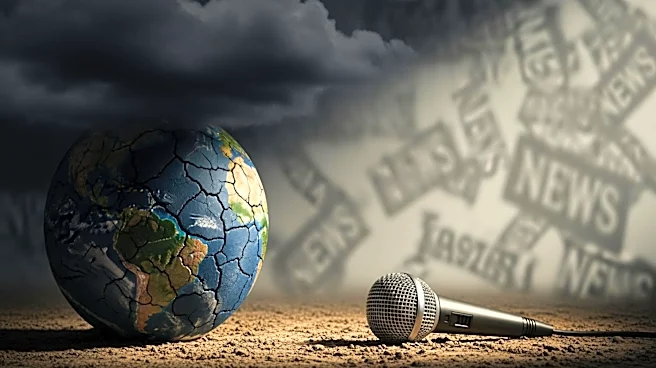
Recent reports indicate a significant decline in media coverage of climate change, despite scientific consensus that the Earth is experiencing unprecedented warming. This trend has been attributed to the overwhelming focus on other pressing global issues,
such as the political dynamics of the Trump administration and international conflicts. Data from the University of Colorado Boulder's Media and Climate Change Observatory shows a 38 percent drop in global news coverage of climate change since its peak in 2021. The reduction in coverage is particularly notable among major U.S. broadcast networks, which have cut climate reporting by 35 percent in the past year.
Why It's Important?
The decline in media attention to climate change has significant implications for public awareness and policy action. Media coverage plays a crucial role in shaping public discourse and influencing policy decisions. As coverage wanes, there is a risk that climate change may become deprioritized in the public and political agenda, potentially stalling efforts to address the crisis. This shift could impact environmental advocacy, funding for climate research, and the implementation of sustainable policies. The media's role in highlighting climate issues is vital for maintaining momentum in the fight against global warming.
Beyond the Headlines
The reduction in climate coverage raises questions about the media's role in prioritizing news topics and the potential consequences of such decisions. The media's focus on immediate crises may overshadow long-term challenges like climate change, which require sustained attention and action. This trend underscores the need for media organizations to balance coverage of urgent events with ongoing issues that have far-reaching impacts. Additionally, the decline in coverage may reflect broader challenges in the media industry, such as resource constraints and shifting audience interests.