




What's Happening?
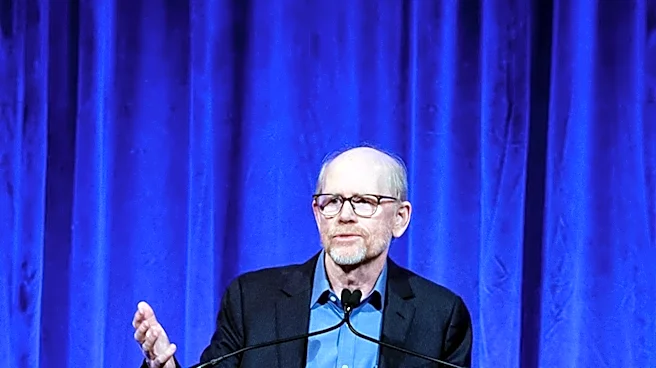
West Virginia University (WVU) recently hosted an event to delve into the historical connections of the Washington family to West Virginia, coinciding with the nation's 250th anniversary. WVU President Michael Benson engaged in a discussion with Walter
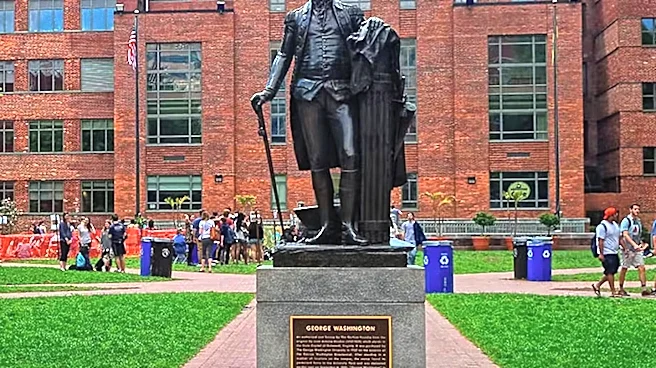
Washington, a fifth great-grandson of George Washington’s younger brother, Samuel. The conversation highlighted the extensive presence and influence of the Washington family in the region, noting the numerous places across America named after George Washington and his family. Walter Washington, who oversees his family's Harewood estate and Happy Retreat near Charles Town, brought attention to the preservation of generations of family artifacts. The West Virginia and Regional History Center at WVU also showcased relevant items from its collection, including a family cookbook previously unknown to Walter Washington. This event is part of WVU's broader recognition of America's upcoming 250th anniversary.
Why It's Important?
This event is significant for several reasons, particularly in reinforcing the deep historical roots of the United States within West Virginia. By exploring the Washington family's early settlement in the Eastern Panhandle, it underscores the state's integral role in the nation's founding narrative. For educational institutions like WVU, such discussions provide valuable opportunities to connect students and the public with primary historical sources and family legacies, enriching their understanding of American history. The preservation of estates like Harewood and Happy Retreat, along with artifacts displayed by the WVU History Center, highlights the importance of historical conservation efforts. This initiative also serves to educate the public on the often-overlooked regional contributions to national history, fostering a stronger sense of local and national identity. It emphasizes that historical figures and their families were not just national symbols but also had tangible, local impacts.
What's Next?
As America approaches its 250th anniversary, it is likely that West Virginia University and other institutions will continue to host similar events and initiatives aimed at exploring and celebrating the nation's history. The focus on the Washington family's ties to West Virginia could inspire further research into other prominent historical families and their regional connections. There may be increased efforts to digitize and make accessible historical archives, such as the family cookbook mentioned, to a wider audience. Local historical societies and museums might collaborate with universities to expand public engagement programs, including exhibitions, lectures, and educational workshops. Furthermore, the emphasis on historical preservation could lead to renewed interest in funding and supporting the maintenance of historical sites and collections across the state, ensuring these legacies are available for future generations. This event sets a precedent for how regional history can be integrated into national commemorative events.
Beyond the Headlines
Beyond the immediate historical discussion, this event touches upon the broader cultural and educational implications of understanding foundational American narratives. It highlights how personal family histories, like that of the Washingtons, are interwoven with the fabric of national identity. The emphasis on the family's early settlement in the Eastern Panhandle challenges a purely East Coast-centric view of early American history, bringing attention to the contributions and presence of founding families in what would become the western frontier. Ethically, it underscores the responsibility of institutions to accurately represent and interpret historical figures, acknowledging their complex legacies. Culturally, such events foster a deeper appreciation for heritage and the continuous effort required to preserve it. It also subtly promotes the idea that history is not just found in textbooks but is alive in physical locations, artifacts, and the descendants of historical figures, encouraging a more tangible connection to the past.