







What's Happening?
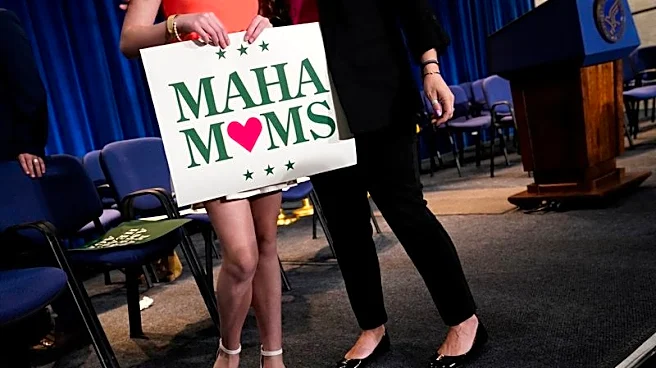
The U.S. Department of Agriculture (USDA) is at the center of a significant shift in food policy, driven by the Make America Healthy Again (MAHA) movement. This movement, which began as a consumer-driven push for healthier food options, is now influencing
legislative decisions, particularly in the context of the farm bill. The recent pesticide preemption debate highlighted the growing intersection of agriculture and food policy, as MAHA advocates argue against federal policies that promote healthier diets while allowing the use of certain chemicals in food production. The farm bill, traditionally a coalition-driven piece of legislation, is now seeing its nutrition title expand to over 80% of spending, causing a fraying of the coalition. This shift is leading to a legislative balancing act, with MAHA's influence pushing for policies that align with the 2025-2030 Dietary Guidelines for Americans, which emphasize whole foods and reduced processed products.
Why It's Important?
The integration of agriculture and food policy has significant implications for U.S. industries and public health. The MAHA movement's influence is reshaping consumer expectations and driving changes in agricultural practices. As hospitals and schools align their meal offerings with dietary guidelines, the demand for certain commodities shifts, impacting farmers and producers. This creates a ripple effect across the supply chain, as products are reformulated and ingredients are adjusted to meet new standards. The ongoing debates and policy shifts highlight the need for agriculture to be actively involved in food policy discussions to avoid unintended disruptions. The farm bill's evolution reflects a broader trend of integrating health concerns into agricultural practices, which could lead to long-term changes in how food is produced and consumed in the U.S.
What's Next?
As the farm bill continues to evolve, stakeholders in the agriculture and food industries will need to adapt to the changing landscape. Policymakers will likely face increased pressure to address the growing influence of health-driven movements like MAHA. This could lead to further legislative changes that prioritize consumer health over traditional agricultural practices. The ongoing pesticide debate and the integration of health concerns into food policy suggest that future legislation will need to balance these competing interests. The outcome of these discussions will have lasting impacts on the agricultural sector and the broader food system in the U.S.
Beyond the Headlines
The collapse of traditional silos between agriculture and food policy represents a fundamental shift in how these sectors are governed. The integration of health concerns into agricultural practices raises ethical and legal questions about the role of government in regulating food production. As consumer preferences continue to evolve, driven by movements like MAHA, the agricultural sector will need to navigate these changes while maintaining economic viability. The long-term implications of these shifts could include a reevaluation of the relationship between food production and public health, as well as increased scrutiny of agricultural practices that impact consumer health.