








What's Happening?
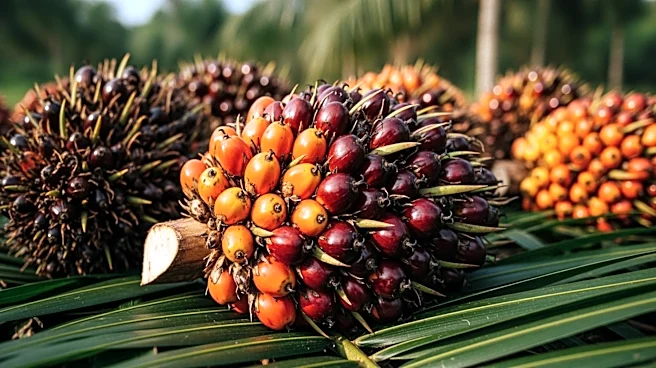
The Tripura government, led by Agriculture and Farmers Welfare Minister Ratan Lal Nath, is actively promoting oil palm cultivation to achieve self-sufficiency in edible oil production. This initiative is part of a broader effort to reduce India's reliance
on imported edible oils, which currently account for over half of the country's consumption. The government is providing extensive support to farmers, including free oil palm saplings and financial incentives for land preparation and cultivation. The initiative is part of the National Mission on Edible Oils–Oil Palm, which emphasizes cultivation in regions with favorable conditions, such as the Northeastern and southern states of India. Since the current administration took office, over 3,500 hectares have been brought under oil palm cultivation in Tripura, with plans to expand further.
Why It's Important?
This initiative is significant as it addresses India's substantial edible oil import bill, which impacts the country's foreign exchange reserves. By promoting domestic production, the government aims to enhance self-reliance and provide additional income opportunities for farmers. The focus on oil palm cultivation is strategic, given the crop's high yield and the increasing global demand for palm oil. This move could potentially stabilize local markets and reduce the volatility associated with international oil prices. Additionally, the program supports rural development by providing financial incentives and resources to farmers, thereby boosting the agricultural sector's contribution to the economy.
What's Next?
The Tripura government plans to continue expanding oil palm cultivation, with ongoing efforts to bring more land under cultivation. The success of this initiative could lead to similar programs in other states, further reducing India's dependency on imported edible oils. The government may also explore partnerships with private sector players to enhance processing and distribution capabilities. Monitoring the program's impact on local ecosystems and ensuring sustainable practices will be crucial as cultivation expands. Stakeholders, including policymakers and agricultural experts, will likely assess the program's outcomes to refine strategies and maximize benefits.