





What's Happening?
A new meta-analysis of 87 randomized controlled trials, published in the European Heart Journal, provides strong evidence that higher whole-grain intake is associated with improvements in various cardiometabolic risk factors. The study, which included
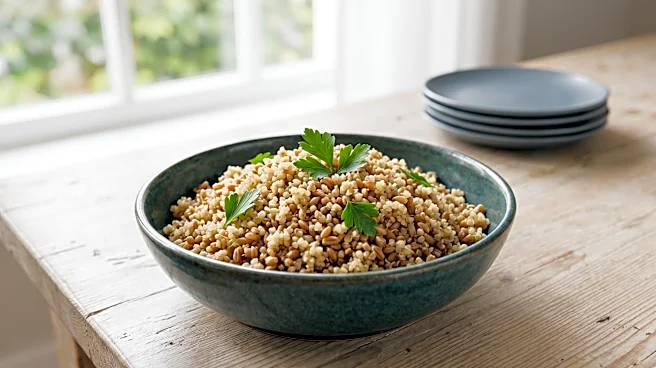
6,529 adults from Asia, Europe, Canada, the U.S., Australia, and Brazil, is the largest and most comprehensive review to date on this topic. Researchers found that increased consumption of whole grains led to reductions in total cholesterol, body weight, waist circumference, and interleukin-6, an inflammation marker. Significant improvements were also observed in LDL cholesterol, HDL cholesterol, triglycerides, blood pressure, fasting glucose, hemoglobin A1C, fasting insulin, and body fat percentage. The most substantial improvements were noted with a daily intake of approximately four to six servings of whole grains. One serving is defined as half a cup of cooked whole-grain rice, quinoa, farro, freekeh, bulgur, oatmeal, or whole-grain pasta, one slice of 100-percent whole-grain bread, a one-ounce mini 100-percent whole-grain muffin, or one cup of 100-percent whole-grain, ready-to-eat cereal. The study emphasizes that while individual risk factor improvements were modest, the cumulative effect across multiple factors could offer greater protection against heart disease and stroke over time.
Why It's Important?
This research is important for public health in the U.S. as it reinforces the benefits of dietary choices on chronic disease prevention. Heart disease remains a leading cause of mortality in the United States, and identifying clear, actionable dietary recommendations can significantly impact population health outcomes. The findings provide a robust scientific basis for health organizations and dietary guidelines to further promote whole-grain consumption. For consumers, it offers clear guidance on how much whole grain to incorporate into their daily diet to achieve measurable health benefits, moving beyond general recommendations to more specific intake levels. The emphasis on reducing inflammation markers like interleukin-6 is particularly significant, as chronic inflammation is linked to a wide range of health issues beyond cardiovascular disease. Food manufacturers and the agricultural sector may also see increased demand for whole-grain products, potentially influencing product development and marketing strategies to meet evolving consumer health needs and dietary recommendations.
What's Next?
Following this comprehensive study, it is likely that health organizations and dietary guideline committees in the U.S. will review and potentially update their recommendations regarding whole-grain intake. Public health campaigns may intensify efforts to educate the public on the benefits and practical ways to incorporate more whole grains into their diets. Consumers can expect to see more emphasis on whole grains in nutritional advice and food labeling. The food industry may respond by developing a wider array of whole-grain products and making it easier for consumers to identify and choose them. Further research may focus on the long-term effects of sustained whole-grain consumption and explore the specific mechanisms through which whole grains exert their protective effects, such as their impact on the gut microbiome. Healthcare providers may also begin to more actively counsel patients on specific whole-grain intake targets as part of a broader strategy for managing cardiometabolic risk factors.
Beyond the Headlines
The study's findings underscore a broader shift in nutritional science towards understanding the holistic impact of food components rather than isolated nutrients. Whole grains, rich in fiber, vitamins, minerals, and bioactive plant compounds, are believed to improve insulin sensitivity, reduce inflammation, nourish beneficial gut bacteria, and promote satiety. This multi-faceted action highlights the complexity of dietary health and moves beyond a simplistic view of 'good' versus 'bad' foods. The research also implicitly challenges the prevalence of refined grains in the typical American diet, which often strips away these beneficial components. Promoting whole-grain consumption could lead to a re-evaluation of food processing practices and a greater emphasis on minimally processed foods. Ethically, this research supports the argument for accessible and affordable whole-grain options for all socioeconomic groups, as dietary disparities often contribute to health inequities. Culturally, it may encourage a return to traditional diets that naturally incorporated more whole grains, fostering a deeper appreciation for diverse and nutrient-dense food sources.