





What's Happening?
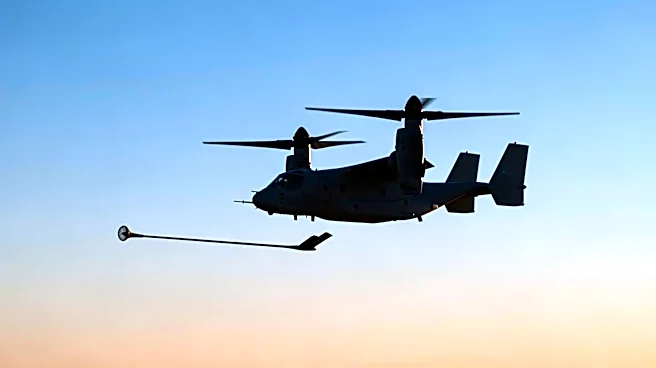
The U.S. Marine Corps has decided to fully replace the nacelles on its Bell Boeing V-22 Osprey fleet, aiming to improve readiness and safety. Previously, the Marine Corps focused on replacing only wiring harnesses within the nacelles to address sustainment
issues cost-effectively. However, validated performance data from the Air Force Special Operations Command indicated that full nacelle replacement significantly enhances readiness. With an anticipated budget increase in fiscal 2027, the Marine Corps plans to purchase kits this year and begin installations in 2028. This decision is part of broader upgrade efforts, including the Osprey Drive System Safety and Health Instrumentation (ODSSHI) and the V-22 Fleet Optimization and Reduction in Configuration Effort (VFORCE).
Why It's Important?
The decision to fully replace the nacelles on the V-22 Osprey fleet underscores the Marine Corps' commitment to enhancing aircraft reliability and operational readiness. By addressing persistent maintenance challenges, the initiative aims to reduce downtime and improve mission capabilities. The upgrade is crucial for maintaining the fleet's effectiveness in various operational scenarios, including troop transport and equipment delivery. The increased funding reflects a strategic prioritization of aviation safety and performance, potentially influencing future budget allocations and procurement strategies within the military aviation sector.
What's Next?
The Marine Corps will proceed with purchasing nacelle replacement kits, with installations expected to begin in 2028. As part of the broader upgrade strategy, the Marine Corps will continue to implement the ODSSHI program, which involves installing sensors to monitor vibration data and forecast component failures. The VFORCE initiative will also progress, converting current Block B MV-22s to a common Block C configuration. These efforts are likely to enhance fleet standardization and operational efficiency, with potential implications for future aircraft development and maintenance protocols.