







What's Happening?
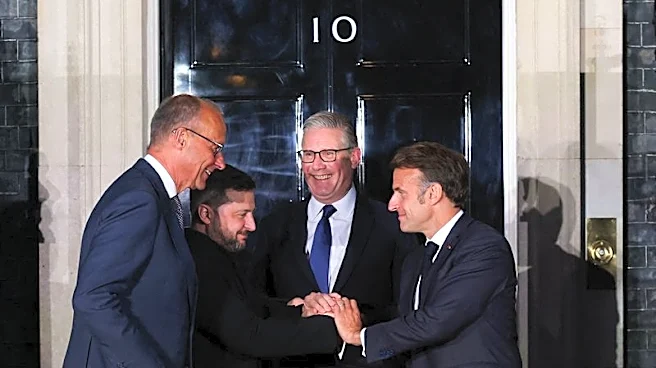
European leaders from the U.K., France, and Germany have emphasized the urgent need to enhance Ukraine's defense capabilities against Russian missile attacks. During a meeting in London, British Prime Minister Keir Starmer, Ukrainian President Volodymyr
Zelenskyy, French President Emmanuel Macron, and German Chancellor Friedrich Merz discussed the escalation of Russian missile and drone attacks, particularly the use of Oreshnik missiles. The leaders condemned these attacks and called for increased production of interceptors and the development of anti-ballistic missile capabilities. They also urged Russian President Vladimir Putin to agree to an immediate ceasefire. The meeting highlighted the ongoing support from the U.K., France, and Germany, who are part of the 'coalition of the willing' initiative to provide security guarantees for Ukraine.
Why It's Important?
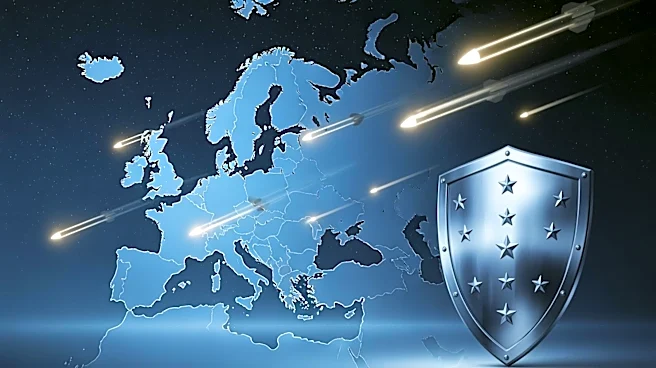
The meeting underscores the critical need for international support to bolster Ukraine's defenses amid ongoing Russian aggression. The increased missile attacks pose a significant threat to Ukrainian civilians and infrastructure, highlighting the urgency for enhanced defense systems. The coalition's support is vital for Ukraine's security and stability, as it faces a shortage of air defense systems. The situation also reflects broader geopolitical tensions, with potential implications for NATO and European security. The leaders' call for a ceasefire and increased defense production indicates a commitment to countering Russian aggression and supporting Ukraine's sovereignty.
What's Next?
The next steps involve scaling up the production of defense systems and potentially co-developing new technologies to counter missile threats. The international community, particularly NATO allies, may need to increase their support and coordination to ensure Ukraine's security. The situation also requires diplomatic efforts to negotiate a ceasefire and address the broader conflict. The ongoing conflict and defense needs may influence future international relations and defense policies, particularly in Europe.