




What's Happening?
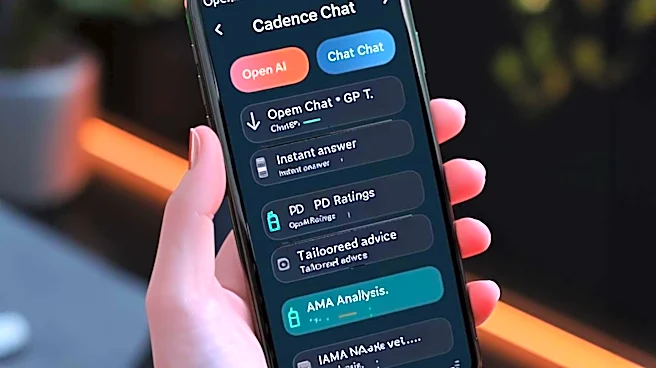
AI chatbots are increasingly integrating video content into their responses, marking a significant shift in how users receive information online. Initially, chatbots provided text-based answers, often citing websites. However, in the last year, these
AI agents have begun extracting and summarizing information directly from millions of hours of recorded media, particularly YouTube. This change is evident in platforms like Google's AI Overviews, ChatGPT, and Perplexity, where responses now frequently pull in citations from video sources. Marketing firm Ahrefs reported that YouTube was the most cited source in AI Overviews for a broad set of U.S. queries, capturing 22.9% of citations. Another study found YouTube surpassing Reddit as a source in Large Language Model (LLM) responses, with a 16% share. This development suggests that AI models are becoming more adept at processing and synthesizing information from video, transforming how users find and consume content.
Why It's Important?
This pivot to video by AI chatbots has profound implications for content creators, digital advertising, and the overall online information ecosystem in the U.S. For content creators, particularly those on platforms like YouTube, it means a new avenue for their content to be discovered and utilized, but also a potential shift in how their work is consumed. Instead of users watching entire videos, AI might summarize key information, potentially impacting viewership and ad revenue. Digital advertising companies, collectively worth trillions of dollars, face significant changes as consultants are now advising brands on how to create videos that capture chatbot attention. This could lead to a new form of 'generative engine optimization' (GEO), where content is tailored for AI ingestion rather than direct human consumption. The shift also highlights the growing dominance of video as a primary source of information, further solidifying YouTube's role as a critical repository of knowledge, especially for 'how-to' content.
What's Next?
The integration of video into AI chatbot responses is likely to continue and expand, leading to further evolution in online content creation and consumption. Content creators may increasingly optimize their videos for AI summarization and extraction, focusing on clear, concise information delivery. This could also spur innovation in AI capabilities, as models become more sophisticated in understanding and synthesizing complex visual and auditory information. For users, the experience of finding information online will become even more mediated by AI, potentially leading to quicker access to answers but also raising questions about the depth and nuance of information received. The economic models of platforms like YouTube, which rely on user engagement and ad views, may need to adapt as AI acts as an intermediary, potentially reducing direct human interaction with videos. This trend could also intensify the debate around data ownership and compensation for content used by AI models.
Beyond the Headlines
This development touches upon deeper ethical and structural issues within the internet's ecosystem. The 'extractive' nature of AI, which trains on vast amounts of public web data, including video, without direct compensation to creators, raises concerns about the sustainability of content creation. An internal Microsoft memo, revealed in court filings, warned of a 'doom loop' where AI content strategies could harm the economic foundations of its essential suppliers. This highlights a potential conflict between AI's utility and the economic viability of human-generated content. The ability of AI to 'watch all those videos for you' could fundamentally alter how people engage with media, potentially leading to a decline in active consumption and a rise in passive, AI-curated information. This shift also underscores the increasing power of large tech companies that own vast data repositories, like Google with YouTube, in shaping the future of information access and knowledge dissemination.