








What's Happening?
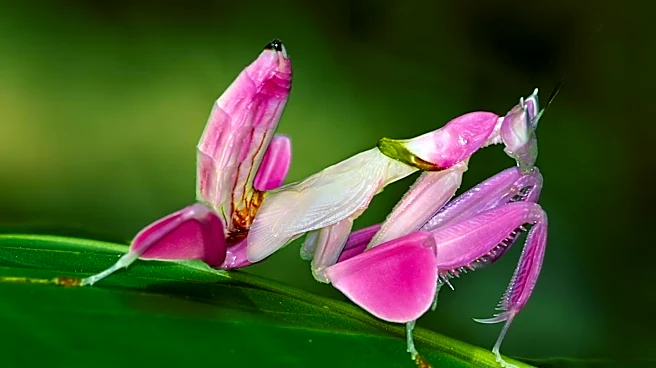
Researchers have officially classified two Asian mantis species, Hierodula tenuidentata and Hierodula patellifera, as Invasive Alien Species in Europe. This designation follows a study led by Roberto Battiston from the Museum of Archaeology and Natural
Sciences 'G. Zannato,' which highlights the ecological impact of these mantises on European wildlife. The species have been present in Europe for about a decade, but their populations have surged recently, particularly in Mediterranean and continental regions. The mantises are large, adaptable predators that reproduce rapidly, posing a threat to native species by preying on pollinators and small vertebrates. The study emphasizes the need for public awareness and citizen science to monitor and manage their spread.
Why It's Important?
The rapid spread of these invasive mantises poses significant ecological challenges, threatening biodiversity in Europe. Their presence disrupts local ecosystems by preying on native species, including important pollinators and protected animals. This situation underscores the broader issue of how climate change and human activities facilitate the spread of invasive species, altering natural boundaries. The study calls for targeted conservation efforts and public engagement to mitigate these impacts, highlighting the role of citizen science in ecological monitoring and awareness.
What's Next?
Efforts to manage the spread of these invasive mantises will likely involve increased public education and engagement. Researchers are encouraging citizens to report sightings and participate in monitoring programs. Additionally, conservation strategies may be developed to protect native species and ecosystems from further disruption. The study suggests that understanding and controlling the spread of these mantises will require collaboration between scientists, policymakers, and the public.