
What's Happening?
French President Emmanuel Macron has extended an offer to host ceasefire negotiations between Israel and Lebanon in Paris. This proposal aims to prevent Lebanon from descending into chaos amid escalating tensions. Macron emphasized the need for Hezbollah
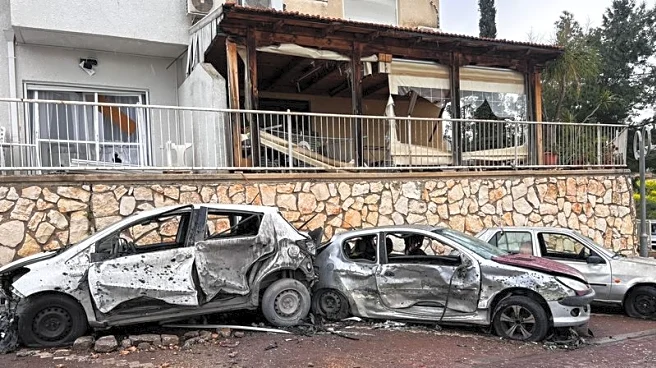
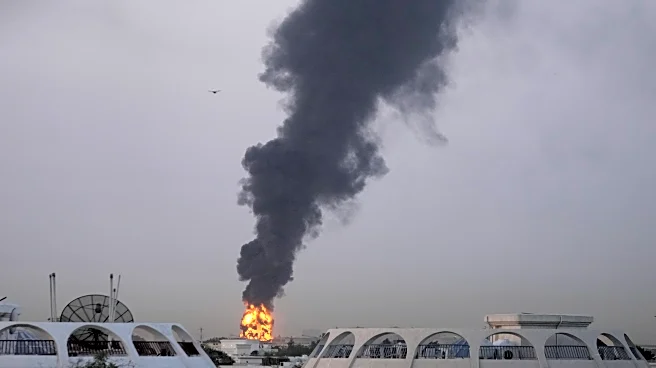
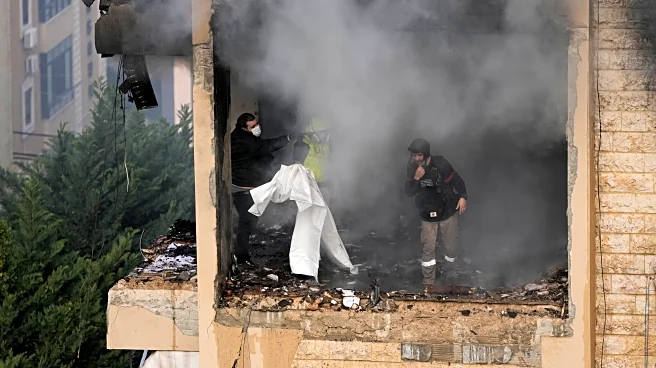
to halt its conflict and for Israel to cease its large-scale offensive and airstrikes. The situation has led to significant displacement, with the United Nations reporting over 800,000 people displaced in Lebanon, a figure that Israeli Defense Minister Israel Katz claims is even higher. The Lebanese government has shown willingness to engage in direct talks with Israel, with Macron urging Israel to seize this opportunity to find a solution that respects Lebanon's sovereignty.
Why It's Important?
The proposed ceasefire talks are crucial in addressing the humanitarian crisis and preventing further escalation in the region. The conflict has already resulted in significant displacement and could destabilize Lebanon further if not addressed. Macron's initiative highlights France's role as a mediator in Middle Eastern conflicts and underscores the international community's concern over the potential for broader regional instability. Successful negotiations could lead to a reduction in hostilities and pave the way for a more stable geopolitical environment, benefiting both regional and global stakeholders.
What's Next?
If the ceasefire talks proceed, they could lead to a formal agreement that de-escalates the current conflict. Key stakeholders, including Israel, Lebanon, and Hezbollah, will need to engage constructively to reach a consensus. The international community, particularly countries with vested interests in Middle Eastern stability, will likely monitor the situation closely. The outcome of these talks could influence future diplomatic efforts in the region and set a precedent for resolving similar conflicts.