
What's Happening?
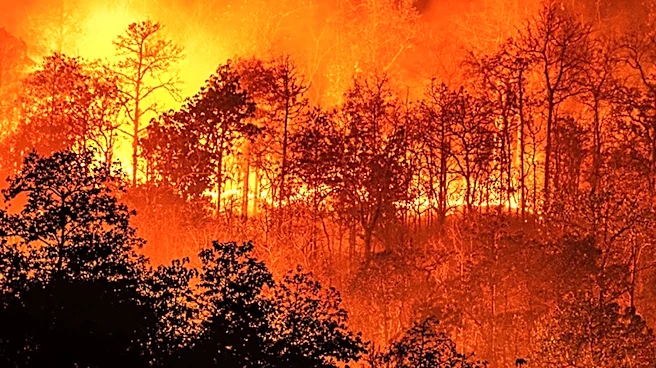
Indonesia has experienced a significant surge in wildfires, with 1.9 million hectares of land affected between January and September 2026, an area more than three times the size of Bali. Over half of this
damage occurred in September alone, marking a 38% increase compared to the worst fire year in 2019. These fires have led to widespread haze, causing school closures in neighboring Malaysia and prompting renewed scrutiny of the palm oil industry. Approximately 10.6% of the affected land, or 202,000 hectares, fell within oil palm concession boundaries. Singapore has amended its Transboundary Haze Pollution Act, increasing fines for offenses, and is investigating 10 Singapore-registered companies, including some involved in palm oil production, for potential links to the fires. Joseph D’Cruz, CEO of the Roundtable on Sustainable Palm Oil (RSPO), welcomed these inquiries, emphasizing the need for accountability and collective learning.
Why It's Important?
The escalating wildfires in Indonesia have profound environmental, social, and economic implications. Environmentally, the fires contribute significantly to air pollution and greenhouse gas emissions, impacting regional air quality and exacerbating climate change. The destruction of forests, including critical habitats like those in Gunung Palung National Park, threatens biodiversity, particularly orangutan populations. Socially, the haze directly affects public health, forcing school closures and disrupting daily life for millions. Economically, the fires cast a shadow over the palm oil industry, a major contributor to Indonesia's economy, raising questions about the credibility of sustainable palm oil certifications. The increased scrutiny and potential legal actions from neighboring countries like Singapore highlight the transboundary nature of environmental issues and the need for international cooperation and accountability in supply chains.
What's Next?
The immediate focus will be on containing the ongoing fires and mitigating their impact. Investigations by Singapore's National Environment Agency (NEA) into companies linked to the fires are expected to continue, potentially leading to penalties and increased pressure on the palm oil industry to demonstrate stricter adherence to sustainability practices. The RSPO will likely face continued pressure to strengthen its certification processes and ensure compliance among its members, especially given that some burning occurred within certified concessions. There will be an ongoing need for improved preparedness and early warning systems, particularly as climate change is expected to intensify future fire seasons. Collaborative efforts between governments, industry, and local communities will be essential to implement effective fire prevention and response strategies, including supporting smallholder farmers with equipment and training.
Beyond the Headlines
The recurring Indonesian wildfires underscore the complex interplay between economic development, environmental protection, and climate change. The debate over 'sustainable palm oil' is intensified by these events, challenging the effectiveness of current certification schemes and corporate commitments to zero-deforestation. The fires also expose vulnerabilities in governance and enforcement, as establishing responsibility for burning remains a challenge due to factors like accidental fires, overlapping land claims, and the difficulty of satellite monitoring through dense smoke. This situation highlights the broader global challenge of balancing agricultural expansion with ecological preservation, particularly in regions highly susceptible to climate-induced disasters. It also raises ethical questions about consumer responsibility and the demand for products that may be linked to environmental degradation.