
What's Happening?
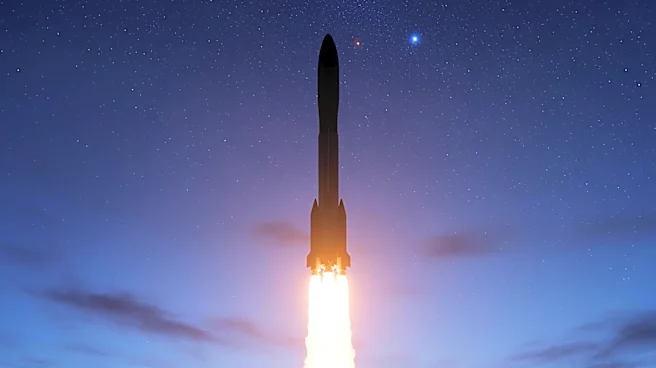
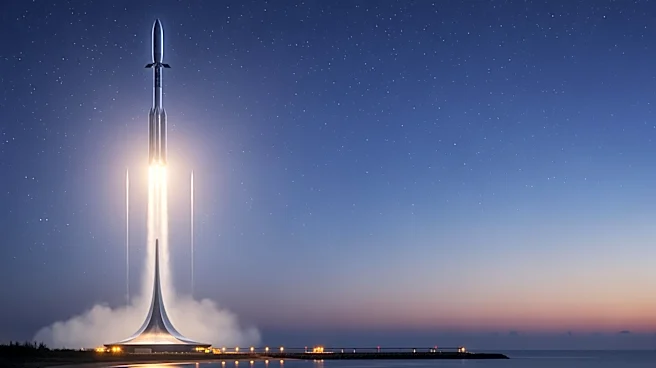
SpaceX successfully launched a Falcon 9 rocket from Vandenberg Space Force Base in Santa Barbara County, California. The launch, which took place within a 37-minute window starting at 11:59 p.m., was part
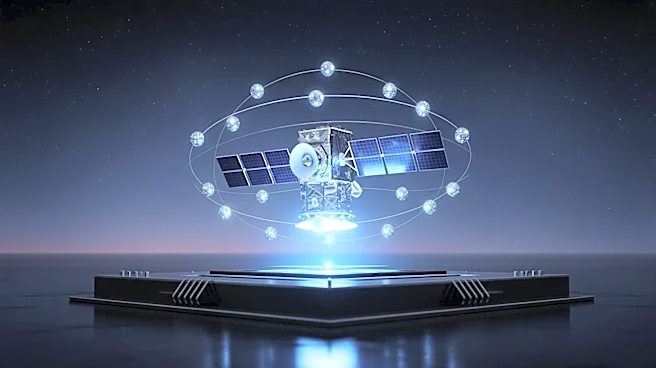
of the CAS500-2 mission. The rocket carried 45 satellites into low-Earth orbit, including the primary payload, an Earth-observation satellite developed by the Korea Aerospace Research Institute. This launch marks the 54th of the year for SpaceX and the 33rd flight for the first-stage booster, which is expected to return to a landing platform at Vandenberg shortly after launch. The mission was initially scheduled for 2022 but was delayed due to geopolitical tensions following Russia's invasion of Ukraine.
Why It's Important?
The successful deployment of the CAS500-2 mission underscores SpaceX's pivotal role in global satellite launches, particularly in the context of international collaborations. The mission highlights the increasing reliance on commercial space companies for satellite deployment, which is crucial for various applications such as disaster monitoring and agricultural observation. The launch also reflects the shifting dynamics in international space partnerships, as geopolitical tensions can significantly impact planned missions. For South Korea, this launch is a critical step in establishing a satellite constellation aimed at enhancing its disaster response and agricultural monitoring capabilities.
What's Next?
Following the successful launch, the focus will shift to the operational deployment of the satellites, particularly the Earth-observation satellite, which will begin its mission to monitor environmental and agricultural conditions. SpaceX will continue to play a significant role in future satellite launches, with more missions planned from Vandenberg and other launch sites. The geopolitical landscape will continue to influence international space collaborations, potentially affecting future launch schedules and partnerships.