

What's Happening?
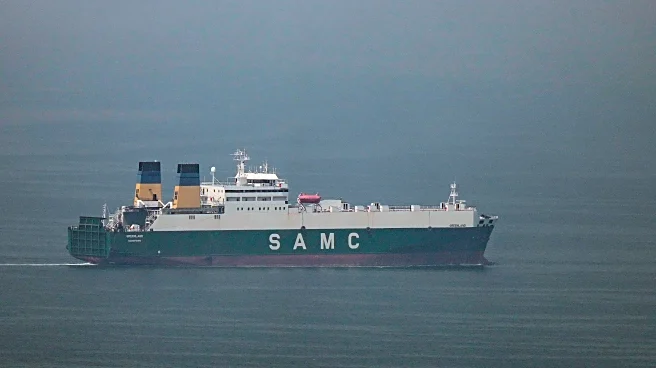
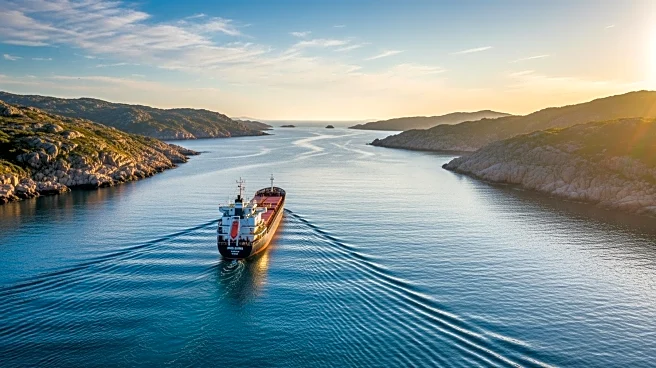
President Trump has called for international allies to assist in policing the Strait of Hormuz, a critical maritime passage for global oil shipments. This request has been met with a lukewarm response from U.S. allies. The call for support comes amid
heightened tensions following the killing of two top Iranian officials in airstrikes. The Strait of Hormuz is a strategic chokepoint, and its security is vital for the global oil supply. However, the reluctance of allies to commit resources reflects broader geopolitical tensions and differing priorities among nations.
Why It's Important?
The security of the Strait of Hormuz is crucial for maintaining stable oil prices and ensuring the uninterrupted flow of energy resources. President Trump's request highlights the U.S.'s strategic interest in the region and the challenges of securing international cooperation. The tepid response from allies may indicate a shift in global alliances and a reluctance to engage in potential conflicts. This situation could impact global oil markets, leading to price volatility and affecting economies dependent on oil imports. The U.S.'s ability to influence international maritime security could be tested, affecting its geopolitical standing.
What's Next?
The U.S. may need to reassess its strategy in securing the Strait of Hormuz, potentially increasing its military presence or seeking alternative diplomatic solutions. The response from allies could lead to further diplomatic discussions or negotiations to address security concerns. The situation may also prompt other nations to reconsider their energy security strategies, possibly leading to increased investments in alternative energy sources or routes. The outcome of these developments could have long-term implications for international relations and global energy markets.