
What's Happening?
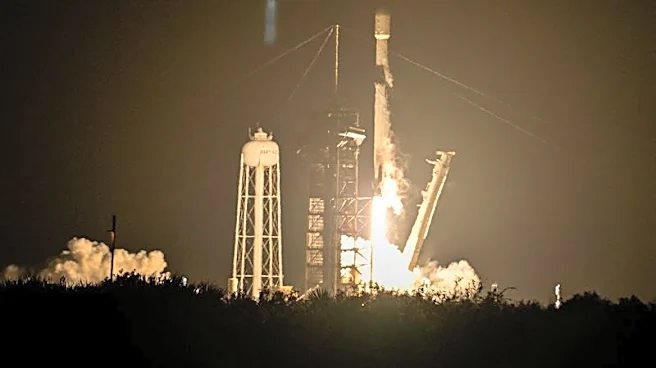
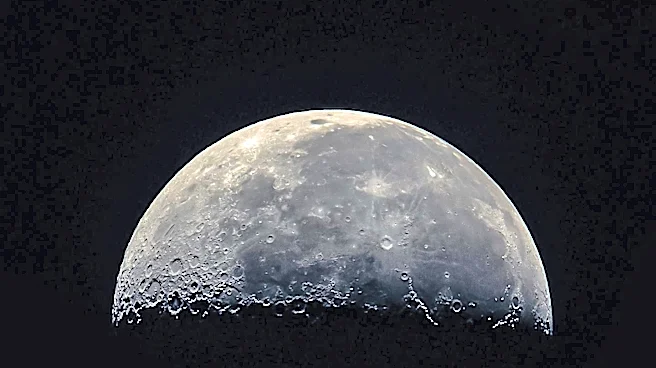
A SpaceX Falcon 9 rocket's upper stage is set to collide with the Moon, according to NASA's Centre for Near-Earth Object Studies. The impact is expected to occur on August 5, 2026, near the Einstein crater. This event is a result of the rocket's trajectory
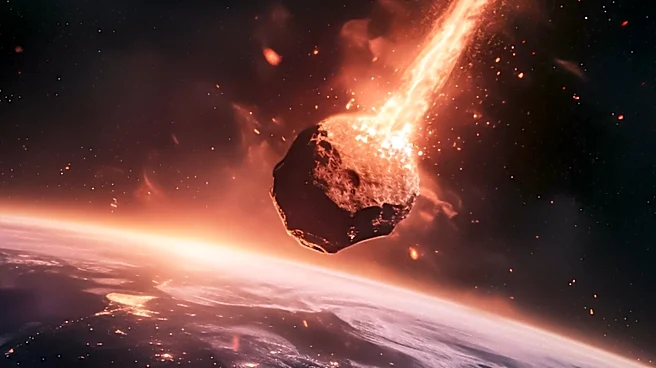
after a mission launched in January 2025. The collision will create a significant dust plume and a new crater, providing a unique opportunity for scientific observation. NASA and other space agencies plan to study the impact to gain insights into lunar surface dynamics and the effects of such collisions.
Why It's Important?
The collision of the SpaceX rocket with the Moon presents a rare chance to study the effects of impacts on the lunar surface. This event will help scientists understand the Moon's geology and the behavior of dust and debris in a low-gravity environment. The data collected could improve models of lunar impacts and inform future missions. Additionally, the event highlights the growing issue of space debris and the need for responsible management of objects in space. The scientific community is keen to leverage this accidental collision to advance knowledge about the Moon and space debris dynamics.
What's Next?
Following the impact, NASA and other organizations will use telescopes and lunar orbiters to observe the resulting dust plume and crater. This data will be analyzed to enhance understanding of lunar impacts and surface composition. The event may also prompt discussions on space debris management and the potential risks of uncontrolled objects in space. As interest in lunar exploration grows, the findings from this collision could influence future mission planning and the development of technologies to mitigate space debris.
Beyond the Headlines
The collision underscores the challenges of managing space debris, as more objects are launched into orbit. It serves as a reminder of the potential hazards posed by space clutter and the importance of developing strategies to minimize risks. The event also highlights the collaborative efforts of international space agencies in monitoring and studying celestial impacts, which could lead to improved global policies on space exploration and debris management.