





What's Happening?
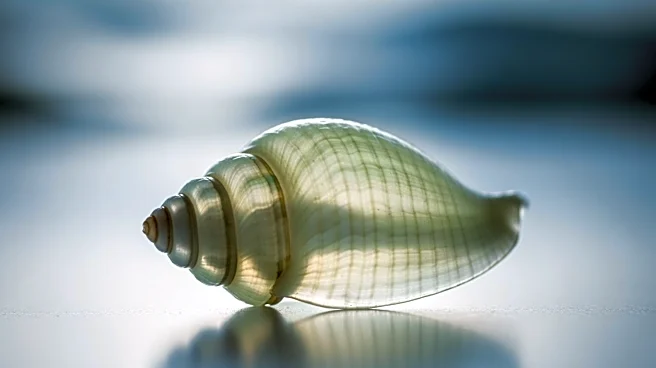
Researchers have developed a new Li/Mg paleothermometer using pteropod shells, which can provide insights into past upper-water temperature conditions. The study, conducted using the LA-ICP-MS system at Kiel University, shows that Li/Mg ratios in pteropod shells reflect
prevailing temperature regimes rather than instantaneous conditions. This method has not yet been independently tested under controlled conditions, but it shows promise for reconstructing historical climate data. The research highlights the potential of pteropod shells as proxy archives for understanding past ocean temperatures and climate change.
Why It's Important?
The development of this paleothermometer is significant for climate research, as it offers a new tool for reconstructing past ocean temperatures, which are crucial for understanding historical climate change events. By providing a more detailed picture of past climate conditions, this method can help scientists predict future climate trends and inform policy decisions related to climate change mitigation and adaptation. The ability to use pteropod shells as proxy archives expands the range of available data sources, enhancing the accuracy and reliability of climate models.
What's Next?
Further research is needed to validate the Li/Mg paleothermometer across different species and environmental settings. Controlled culture experiments and time-resolved field studies will be essential to confirm the robustness of this method. As the scientific community continues to explore the potential of this paleothermometer, it may become a standard tool in paleoclimatology, contributing to a deeper understanding of climate dynamics. Collaboration with other research institutions could accelerate the development and application of this technique in various regions worldwide.