






What's Happening?
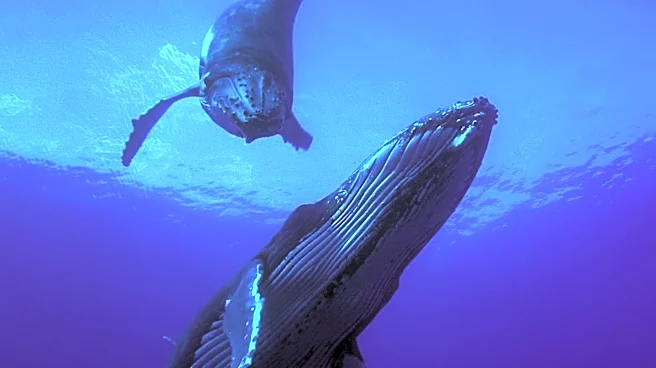
A marine heatwave in the northeastern Pacific Ocean, occurring roughly a decade ago, has been identified as the likely cause for a sharp decline in the Hawaiian humpback whale population. A recent study analyzed over 27,000 photos of whale sightings between
2002 and 2023 across the main Hawaiian islands, sourced from the citizen science platform Happywhale. Researchers found that the Hawaiian humpback whale population decreased by 37% between the 2014-2015 breeding season and the 2021-2022 season. Adult survival rates, which were previously around 99% year over year, plummeted to an estimated 68% during the heatwave. This event also coincided with an unusual mortality event in Alaska and British Columbia, where humpback whales were observed starving and dying. The final population estimate indicates approximately 5,000 fewer humpbacks after the marine heatwave, with researchers believing many likely perished.
Why It's Important?
This significant decline in the Hawaiian humpback whale population underscores the severe ecological impact of marine heatwaves on critical marine species. Humpback whales are a vital part of the marine ecosystem, feeding on krill and small fish in cold Alaskan and Canadian waters before migrating to Hawaii to breed. The disruption of their food sources due to the heatwave, which caused a dramatic decline in forage fish and krill, directly affected their survival and reproductive success. The inability of the population to recover even years after the event highlights the long-term consequences of such environmental shifts. This situation also makes the remaining population more vulnerable to other anthropogenic threats like entanglement, ship strikes, and pollution, posing a serious challenge to conservation efforts and the overall health of North Pacific marine biodiversity.
What's Next?
The North Pacific is currently experiencing another marine heatwave, coupled with a strong El Niño in the tropical Pacific, leading to abnormally high sea surface temperatures across much of the ocean. Given that the Hawaiian humpback population has not yet recovered from the 2013-2016 heatwave, the ongoing warming conditions could further impede their recovery and potentially lead to additional population declines. Researchers will likely continue to monitor the population closely, using platforms like Happywhale, to assess the impact of current and future marine heatwaves. Conservation efforts may need to intensify to mitigate other threats to the whales, such as reducing ship strikes and entanglements, to give the population a better chance at recovery amidst persistent climate challenges. The study's findings also offer valuable insights into the potential impacts of future climate changes on other whale species, such as gray whales, which are also experiencing declines due to changing Arctic conditions.
Beyond the Headlines
The study's findings extend beyond the immediate impact on humpback whales, revealing a broader ecological vulnerability to climate change. The precipitous drop in adult survival rates, a phenomenon rarely seen in long-lived mammals, signals a profound disturbance to the marine food web. This event highlights the interconnectedness of marine ecosystems, where changes at the base of the food chain, such as declines in krill and forage fish, can have cascading effects on apex predators. The reliance on citizen science platforms like Happywhale for data collection also points to the increasing importance of public participation in environmental monitoring and research. Ethically, the situation raises questions about human responsibility in mitigating climate change and protecting vulnerable species, especially as disruptions to the climate system are predicted to affect humpback whale populations globally. The long-term shifts triggered by such events could redefine marine conservation strategies and emphasize the urgency of addressing global warming.