


What's Happening?
Iranian President Masoud Pezeshkian has publicly declared his willingness to sacrifice his life for Iran, as tensions with the United States escalate. In a social media post, Pezeshkian stated that over 14 million Iranians have expressed their readiness
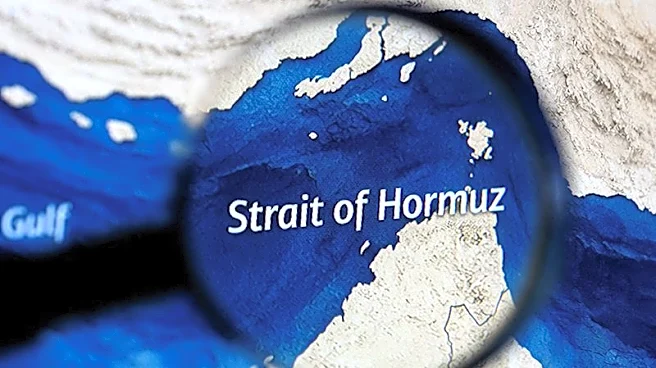
to defend the nation. This call for national sacrifice comes amid fears of potential U.S. strikes on Iranian infrastructure, including power plants. An Iranian official has urged citizens to form human chains around these facilities to protect them. The situation is part of a broader standoff over the Strait of Hormuz, a critical chokepoint for global oil trade. Negotiations between the U.S. and Iran appear to be faltering, with a deadline set by President Trump looming.
Why It's Important?
The public call for sacrifice by Iran's leadership highlights the severity of the current crisis and the potential for further escalation. The Strait of Hormuz is a vital artery for the global oil supply, and any disruption could have significant economic repercussions worldwide. The U.S. views the situation as a major security and energy emergency, which could lead to increased military involvement. Iran's strategy of mobilizing its population and preparing for potential attacks reflects its determination to resist external pressures. This development could further strain U.S.-Iran relations and impact regional stability, with potential consequences for global energy markets.
What's Next?
With negotiations at a standstill, the likelihood of military action remains high. The international community may seek to mediate the situation to prevent further escalation. Iran's call for national sacrifice and the mobilization of its citizens could lead to increased domestic support for the government, but also risks internal dissent if the situation worsens. The U.S. and its allies will likely continue to monitor the situation closely, preparing for potential military or diplomatic responses. The outcome of this standoff could have lasting implications for U.S.-Iran relations and the broader geopolitical landscape.