
What's Happening?
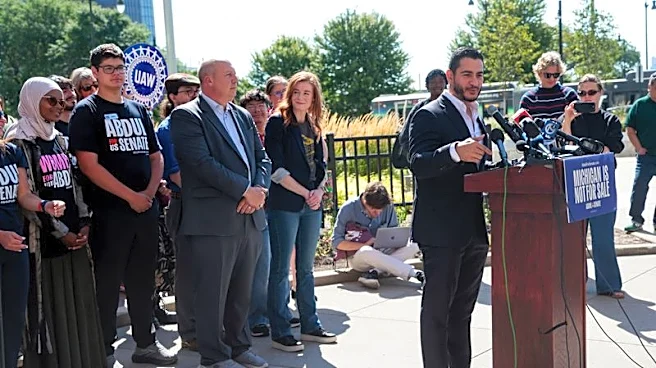
The recent Michigan primaries have exposed significant challenges for both the Democratic and Republican parties as they prepare for the upcoming general election. In the Democratic camp, progressive Abdul
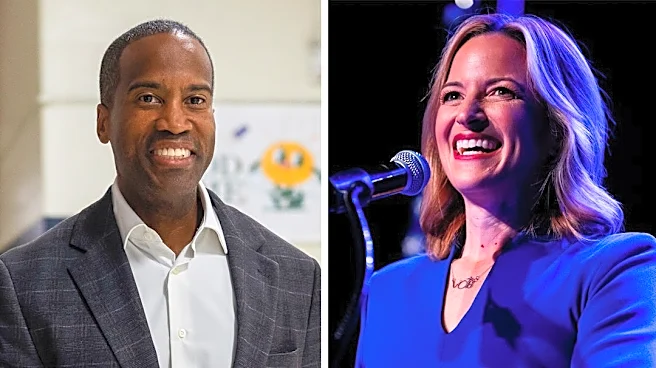
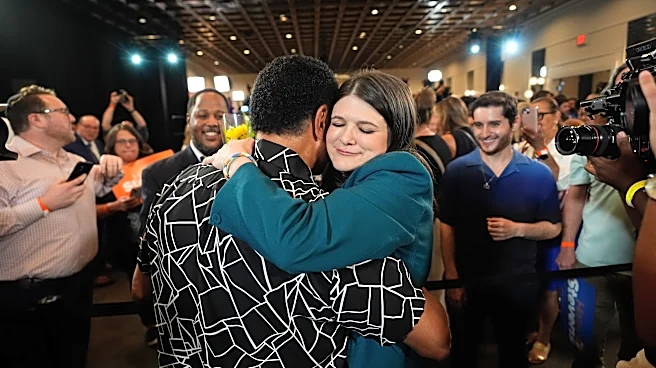
El-Sayed's victory over moderate Rep. Haley Stevens in the Senate race has highlighted internal divisions. Democrats are now working to unify the party, with efforts including a unity rally featuring former Transportation Secretary Pete Buttigieg. Meanwhile, Republicans are grappling with President Trump's declining approval ratings, particularly concerning his handling of the economy and the Iran war. These dynamics are playing out in Michigan's 7th District, a key battleground where GOP Rep. Tom Barrett faces a challenge from progressive activist William Lawrence.
Why It's Important?
The outcomes of the Michigan primaries are indicative of broader national trends that could influence the general election. For Democrats, the need to bridge the gap between progressive and moderate factions is critical to maximizing voter turnout. The party's ability to present a united front will be essential in countering Republican attacks and appealing to a broad electorate. For Republicans, managing the impact of President Trump's approval ratings on down-ballot races is a pressing concern. The party's strategy in addressing economic issues and foreign policy will be pivotal in retaining key districts. The Michigan primaries serve as a microcosm of the challenges both parties face in maintaining cohesion and appealing to voters.
What's Next?
As the general election approaches, both parties will need to refine their strategies to address the challenges highlighted by the Michigan primaries. Democrats will focus on unifying their base and countering Republican narratives, while Republicans will aim to bolster their economic messaging and manage the influence of President Trump. The outcomes in Michigan's 7th District and other key races will be closely watched as indicators of national trends. Both parties are likely to intensify their campaign efforts, with increased focus on voter outreach and issue-based messaging.