





What's Happening?
The Wallis Annenberg Wildlife Crossing, the world's largest wildlife overpass, is set to officially open on December 2 near Agoura Hills, California. Spanning U.S. 101 and a feeder road, the 1,250-foot bridge aims to provide a safe passage for animals,
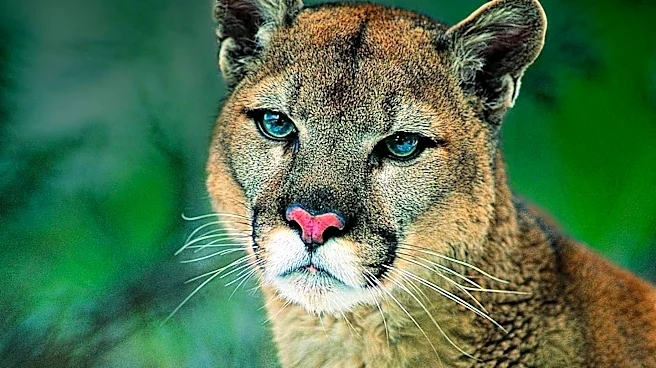
particularly mountain lions, across a busy freeway that sees approximately 300,000 cars daily. The project, costing $114 million, was funded by donations from 6,000 members of the public, grants from nonprofits, and state conservation funds, with a significant $25 million contribution from the Wallis Annenberg Foundation. Even before its official opening, motion-sensor cameras have captured coyotes using the crossing, indicating its immediate effectiveness. The bridge's landscape is designed to blend seamlessly with the surrounding hillsides, featuring native vegetation and sound-dampening walls to encourage wildlife use. This initiative is a direct response to decades of scientific findings that roadways have confined animal populations, leading to genetic isolation and increased mortality rates.
Why It's Important?
This wildlife crossing is crucial for the survival of mountain lions in California, a species listed as threatened. Scientists have observed that freeways have largely trapped these animals in isolated mountain ranges, leading to inbreeding and a heightened risk of extinction. A recent report from the University of California, Davis, highlighted the severity of the issue, stating that at least 780 mountain lions, or 18% of the state's population, are killed by vehicles annually. The crossing offers a vital solution by connecting fragmented habitats, allowing animals to safely access broader territories for foraging and mating, thereby increasing genetic diversity. The project also serves as a model for future conservation efforts, with groups like the Wildlands Network hoping it will inspire similar constructions across California and the nation to mitigate wildlife-vehicle collisions and protect biodiversity.
What's Next?
Following the official opening, scientists from the National Park Service plan to implant 'biologgers' in cougars and other wild animals. These devices will monitor physiological data such as heart rate, body temperature, and activity levels, providing insights into how animals adapt to and utilize the new bridge. This data will help determine if animals are stressed or relaxed while using the crossing, informing future wildlife corridor designs. In the immediate vicinity of the new span, scientists have already detected various mammals, including bobcats, deer, gray foxes, and a female mountain lion with two kittens, suggesting that these animals are exploring the area and may soon use the crossing. Conservation groups are also working with state transportation officials to plan additional wildlife bridges, such as one in the Mojave Desert for bighorn sheep, indicating a growing momentum for such infrastructure projects.
Beyond the Headlines
The Wallis Annenberg Wildlife Crossing represents a significant shift in infrastructure planning, integrating ecological needs directly into major transportation projects. It highlights a growing public and scientific recognition of the severe impact human development has on wildlife populations and biodiversity. The project's success, partly fueled by the public's emotional connection to P-22, a celebrity cougar whose story symbolized the plight of isolated wildlife, underscores the power of charismatic megafauna in galvanizing conservation efforts. Beyond its immediate ecological benefits, the crossing also serves as an educational tool, raising awareness about habitat fragmentation and the importance of wildlife corridors. It sets a precedent for how large-scale engineering can be harmonized with environmental preservation, potentially influencing urban planning and conservation strategies globally by demonstrating a tangible solution to human-wildlife conflict in increasingly urbanized landscapes.